
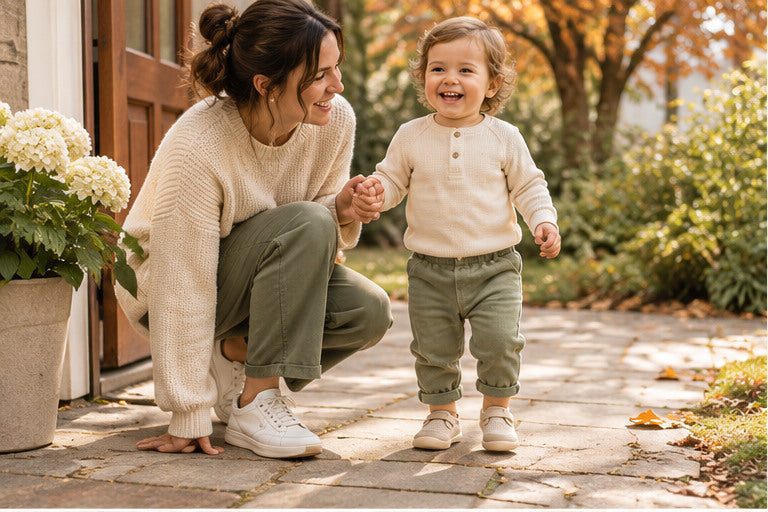
Outdoor adventures, comfortable layers, and a gentler way to approach bedtime as the weather changes.
Cool mornings, sunny afternoons, and chilly evenings can make dressing a little one feel like a daily puzzle. Do they need thicker socks? Are their shoes still the right size? And how can you keep bedtime comfortable without adding too many layers?
The answer usually starts with a simple idea: dress for the activity and the actual conditions, not just the season. What works for a short walk outside is different from what belongs in a warm nursery at night.
1. Start with the day you actually have
A cool morning doesn't guarantee a cold afternoon. Before getting dressed, consider three questions: What is the weather like now? Where will your toddler be playing? And how much time will they spend outside?
For a short walk in mild weather, a comfortable long-sleeve layer and appropriate shoes may be enough. A windier, wetter, or colder day calls for more weather protection. Layers that can be removed when you come inside can be more practical than one very heavy outfit.
Try to check your little one's comfort along the way instead of relying on a fixed number of layers. Clothing should let them bend, squat, climb, and explore without feeling restricted.
2. Outdoor shoes should protect—not fight—little feet
If your child is walking outdoors, shoes are mainly there to protect feet from rough or unsafe surfaces. The American Academy of Pediatrics recommends comfortable, flexible, closed-toe shoes with nonskid soles and room for growing toes.
A 60-second shoe check
- Toe room: space without oversizing.
- Natural flex: the sole bends as your child moves.
- Secure fit: no pinching or rubbing.
- Weather match: footwear suited to the conditions.
- Regular rechecks: growing feet change fast.

For mild, dry everyday outings, Pedibare First Walkers Knit offers a roomy toe shape, soft knit construction, and a flexible rubber sole. Pedibare's barefoot-inspired design emphasizes a wide toe box, zero drop, and flexibility. A breathable knit shoe isn't a substitute for waterproof or insulated footwear in snow or heavy rain.
3. Once you're home, simplify the layers
After outdoor play, take off shoes and wet or bulky outer layers. Check that socks aren't damp, and change clothing if needed. Your toddler may be more comfortable in lightweight, flexible clothes indoors, especially when the heating is on.
This transition is a helpful time to notice small things: Are their shoes leaving pressure marks? Is their waistband comfortable? Do they have enough room to move? Good fit often matters more than having the thickest fabric.

For comfortable evening basics, BubblePanda bamboo long-sleeve pajamas are one option for the move from active play to quieter family time. Choose the size based on your child's measurements and the product's fit guide, not age alone.
4. Bedtime warmth is different from outdoor warmth
The bedroom can be much warmer than the outdoors, particularly when heating is running. That's why daytime jackets, hats, and outdoor shoes should come off before sleep. Instead, look at your child's actual sleeping environment and the clothing layers they already have on.
You may see sleep sacks labeled 0.5, 1.0, or 2.5 TOG. TOG describes insulation; it does not guarantee that a particular room temperature is safe for every child. Other layers, room conditions, and your child's comfort all matter.
BubblePanda offers 1.0 TOG bamboo sleep sacks and 2.5 TOG sleep sacks. A warmer TOG is not automatically the better choice just because it is winter. Check your child's chest for excess warmth and watch for sweating or flushed skin, rather than judging by cool hands alone.
What about a Walker Sleep Sack?
For a mobile child, a BubblePanda Walker Sleep Sack has separate leg openings instead of a closed bottom. Some families like this design during the transition between quiet evening movement and bedtime. It isn't required simply because a child can walk, and it doesn't replace properly fitted daytime shoes or age-appropriate sleep practices.
Whichever sleep garment you choose, check the neckline, arm openings, length, and fit. It should not ride up over the child's face.
5. A simple five-step cooler-weather evening routine
- Come in and reset. Remove outdoor shoes and damp layers, and wash hands after play.
- Check comfort. Look for cold or wet socks, rubbing from shoes, and tight clothing.
- Choose bedtime layers. Dress for the nursery temperature—not the forecast outside.
- Quiet the pace. Read a familiar book or enjoy gentle floor play.
- Prepare a safe sleep space. For babies under 12 months, follow back-to-sleep and clear-crib recommendations.

Frequently asked questions
Do toddlers need shoes indoors in the colder months?
Not necessarily. If the indoor floor is clean, safe, and comfortable, supervised barefoot time may be appropriate. On cold or slippery surfaces, consider well-fitting nonslip socks or other practical protection.
Are lightweight knit shoes warm enough for winter?
It depends on the outing and weather. Lightweight knit shoes can suit dry, mild conditions, but not wet, snowy, or very cold environments. Prioritize dry feet, proper fit, and traction.
Should I automatically switch to a 2.5 TOG sleep sack in November?
No. Consider the room temperature, layers underneath, garment fit, and signs of overheating or discomfort rather than the calendar.
Does my toddler need a Walker Sleep Sack once they start walking?
No. Walker styles may be convenient for some children, but are not required. Choose age-appropriate clothing that fits properly.
Little adventures. Gentler evenings.
Outdoor play and bedtime ask different things of a growing child. Comfortable, flexible footwear can help protect little feet on everyday outings; thoughtfully chosen sleepwear can help make the move toward bedtime simpler.
Room to explore.
Barefoot-inspired footwear designed around toe room and flexible movement for everyday outings.
Explore Pedibare →Comfort for quieter moments.
Explore baby and toddler sleep sacks, including Walker styles and different TOG options.
Explore Sleep Sacks →Sources and further reading: AAP toddler shoe guidance · AAP safe sleep · Pedibare materials & care


Laisser un commentaire
Ce site est protégé par hCaptcha, et la Politique de confidentialité et les Conditions de service de hCaptcha s’appliquent.