
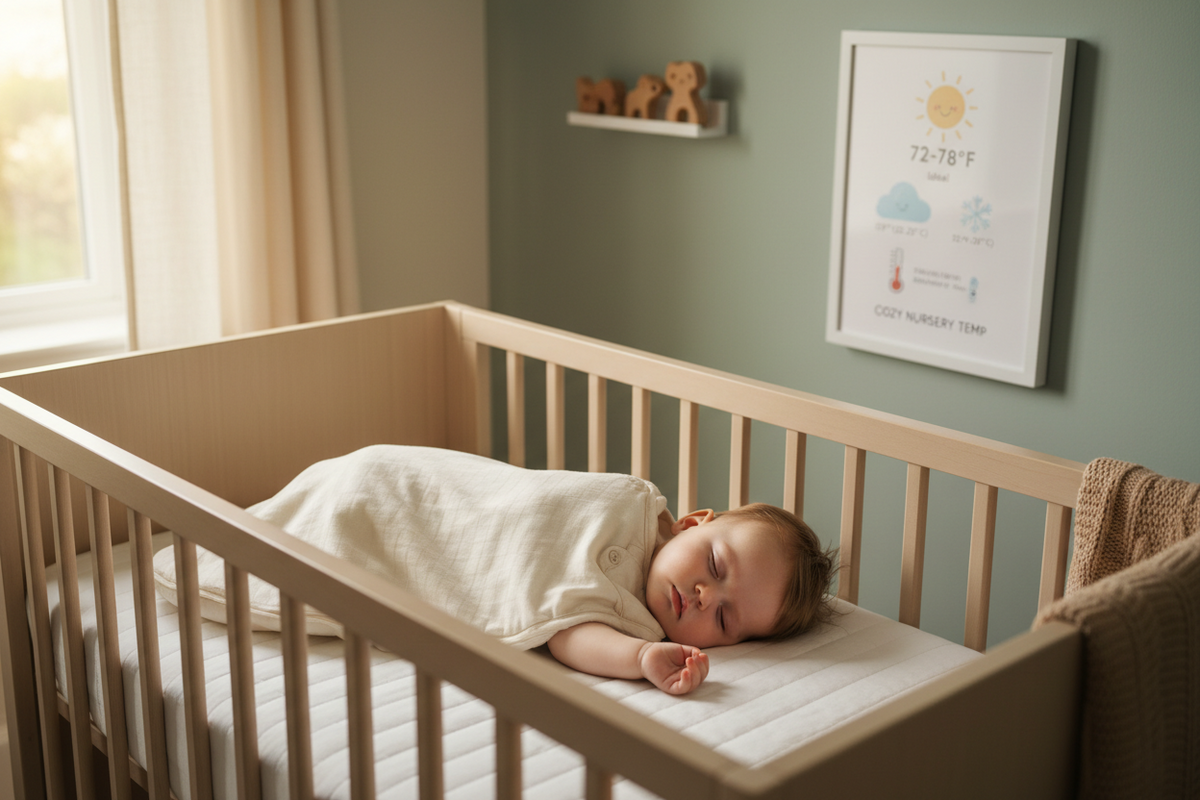
Baby Sleep Sack TOG Guide: Find the Right Warmth for Your Baby
Wondering whether your baby needs a 0.5 TOG, 1.0 TOG, 1.5 TOG, or 2.5 TOG sleep sack? You're not alone. The best starting point is the temperature of the room where your baby actually sleeps—not the month on the calendar.
This guide explains TOG ratings, room-temperature reference ranges, clothing layers, and how to find a sleep sack that fits. You'll also find BubblePanda's bamboo sleep sack options for different needs.
Quick Answer: Which TOG Sleep Sack Does My Baby Need?
Use the measured room temperature as a starting point. The NHS lists these general ranges for commercial baby sleeping bags:
- 0.5 TOG: 24–27°C (about 75–81°F) — warmer rooms.
- 1.0 TOG: 20–24°C (about 68–75°F) — moderately warm rooms.
- 2.5 TOG: 16–20°C (about 61–68°F) — cooler rooms.
These are general NHS reference bands, not guaranteed safe temperatures for every baby. Consider the clothing underneath, fit, sleeves and the specific product instructions. The NHS does not endorse BubblePanda products.
BubblePanda also offers a 1.5 TOG long-sleeve ribbed sleep sack. There is no separate NHS 1.5 TOG temperature range, so its sleeves and the complete outfit must be considered together.

What Does TOG Mean on a Baby Sleep Sack?
TOG stands for Thermal Overall Grade. It describes thermal insulation: a higher TOG generally means a warmer sleep sack. It does not measure breathability, and higher TOG does not necessarily mean better sleep.
Lower TOG: less thermal insulation for warmer conditions.
Higher TOG: more thermal insulation for cooler conditions.
The ideal choice depends on room temperature, the clothing worn underneath, the sleep sack's design and your baby's individual needs.
Baby Sleep Sack TOG Chart
| TOG Rating | Room Temperature Reference | Typical Use |
|---|---|---|
| 0.5 TOG | 24–27°C / approx. 75–81°F | Lighter warmth for warm rooms |
| 1.0 TOG | 20–24°C / approx. 68–75°F | Versatile middle warmth |
| 1.5 TOG | Product-specific; no separate NHS band | BubblePanda long-sleeve ribbed style |
| 2.5 TOG | 16–20°C / approx. 61–68°F | Extra warmth for cooler rooms |
The 0.5, 1.0 and 2.5 TOG bands follow NHS safer sleep guidance. Fahrenheit figures are approximate; temperature boundaries overlap. The 1.5 TOG row describes a BubblePanda product, not an NHS recommendation.
What Is a 0.5 TOG Sleep Sack?
A 0.5 TOG sleep sack is a lightweight option for warmer rooms. It can be a useful choice during summer or in homes that stay warm indoors. Check the measured nursery temperature before deciding—air conditioning can make a hot day feel quite different at bedtime.
Explore BubblePanda 0.5 TOG bamboo sleep sacks →
What Is a 1.0 TOG Sleep Sack?
A 1.0 TOG sleep sack provides more insulation than 0.5 TOG. It is a popular middle option for moderately warm rooms, with the appropriate clothing underneath depending on the garment and your baby.
Explore BubblePanda 1.0 TOG sleep sacks →
Where Does a 1.5 TOG Long-Sleeve Sleep Sack Fit?
BubblePanda's 1.5 TOG long-sleeve ribbed sleep sack has sleeves as well as thermal insulation. Sleeves contribute to the warmth of the whole outfit, so do not treat it as interchangeable with a sleeveless 1.5 TOG design or assign it a fixed room-temperature band based on the NHS chart.
Explore BubblePanda 1.5 TOG long-sleeve sleep sacks →
What Is a 2.5 TOG Sleep Sack?
A 2.5 TOG sleep sack offers higher thermal insulation for cooler rooms. It may be useful during colder months, but indoor heating matters more than the outdoor season. Follow the garment instructions and take clothing layers into account rather than adding extra layers automatically.
Explore BubblePanda 2.5 TOG sleep sacks →
Think of TOG as one part of the whole sleep outfit. Measure the room, consider each clothing layer, check the fit and observe your baby's comfort.
How to Choose the Right TOG for Your Baby
Start with a room thermometer placed where your baby sleeps. A summer night in Florida, an air-conditioned nursery in Texas or a heated room in Ontario can all have very different indoor temperatures. Use the actual room reading, not your state, province or the season alone.

Sleep Sack TOG Guide by Room Temperature
These examples help you start, but clothing is not a fixed recipe. The garment's own instructions and the baby's needs take priority.
| Nursery Temperature | General TOG Starting Point | Clothing Consideration |
|---|---|---|
| 24–27°C (75–81°F) | 0.5 TOG | Often fewer/lightweight layers; follow product guidance |
| 20–24°C (68–75°F) | 1.0 TOG | Consider a light bodysuit or sleeper as appropriate |
| 16–20°C (61–68°F) | 2.5 TOG | Consider suitable base layers without overdressing |
If the room falls outside these general reference bands, consult the sleepwear manufacturer's guidance and your baby's healthcare professional as appropriate. Never assume a TOG rating alone guarantees a safe temperature.
0.5 TOG vs 1.0 TOG: What's the Difference?
| Feature | 0.5 TOG | 1.0 TOG |
|---|---|---|
| Insulation | Lighter | Warmer |
| NHS room reference | 24–27°C | 20–24°C |
| Layers underneath | Generally lighter | Depends on conditions and garment instructions |
How US and Canadian Climates Affect TOG Choices
Florida and Texas: Outdoor warmth doesn't always mean a warm nursery—air conditioning can change your baby's indoor clothing needs.
California and Washington: Coastal weather, mountain temperatures and home heating vary. Check the nursery rather than assuming one TOG works statewide.
Ontario, British Columbia and other Canadian provinces: Winter heating can keep bedrooms warmer than the weather outside suggests. Adjust your selection to the actual indoor temperature.
Do Babies Need Different TOG Sleep Sacks for Each Season?
Not necessarily. Some families use more than one TOG so they can respond to changes in room conditions. Others adjust their baby's sleepwear layers within the manufacturer's guidance. The important thing is to avoid overdressing and to use a properly fitting, unweighted sleep sack.
Common TOG Mistakes to Avoid
Choosing by season alone
Indoor heating and air conditioning can matter more than the weather outside.
Adding too many layers
Sleep sacks already provide insulation. Check the clothing underneath and watch for sweating or a hot chest.
Ignoring fit or sleeves
The neckline and shoulders should fit so your baby's head cannot slip inside. Sleeves add warmth to the overall outfit.
How Bamboo Fabric Works With TOG Ratings
Many families love bamboo-derived fabrics for their soft hand feel, smooth drape and everyday comfort. BubblePanda bamboo sleep sacks are designed with these qualities in mind. TOG still describes insulation, so material alone does not tell you which warmth level to choose or guarantee that your baby won't overheat.
Compare the TOG, garment construction, fit and clothing layers rather than using breathability as a substitute for safe sleep guidance.
1. Measure the room. 2. Consider the whole outfit. 3. Feel your baby's chest or back of the neck. A hot chest or sweating can signal overheating; cool hands or feet alone are not a reliable guide.

A Safer Sleep Reminder
For infants, place your baby on their back on a firm, flat sleep surface. Keep pillows, stuffed toys and loose blankets out of the sleep space. A properly fitting, unweighted sleep sack can be an alternative to loose bedding; do not add a loose blanket over it. Make sure the neck and arm openings are appropriately sized. Read CDC safer sleep guidance →
Find a BubblePanda Sleep Sack That Fits Your Routine
Once you know the nursery temperature, compare the different TOG choices and check the product-specific size and fabric details before buying.
☀️ 0.5 TOG — warm-room options →
🌿 1.0 TOG — versatile middle warmth →
🧸 1.5 TOG — long-sleeve ribbed styles →
For a simple interactive reference, visit the BubblePanda TOG Rating Chart.
Related Reading
What Should a Newborn Wear Under a Sleep Sack? →
Can Newborns Wear Sleep Sacks? →
When Should Baby Start Wearing a Sleep Sack? →
Baby Sleep Sack TOG Checklist
- Measure your baby's actual nursery temperature.
- Use TOG reference bands as a starting point, not a guarantee.
- Consider all pajamas and sleeves together.
- Check neck, shoulders and arm openings for a secure fit.
- Watch for sweating or a hot chest.
- Keep the infant sleep space clear of loose bedding and pillows.
Frequently Asked Questions
What TOG sleep sack should a baby wear in summer?
It depends on the indoor temperature. As a general reference, the NHS lists 0.5 TOG for rooms around 24–27°C (75–81°F). An air-conditioned room may need a different choice.
Is 0.5 TOG or 1.0 TOG better?
Neither is always better. A 0.5 TOG sleep sack provides less insulation than a 1.0 TOG option. Check the nursery temperature, layers and product instructions.
Does the NHS recommend a temperature for 1.5 TOG?
No separate 1.5 TOG band is listed in the NHS commercial sleeping bag reference. BubblePanda's 1.5 TOG sleep sack is long sleeved, so assess the complete outfit rather than treating it as a sleeveless middle option.
Can I add a blanket over a sleep sack?
Do not add loose blankets over an infant's sleep sack. Use an appropriate sleep sack and clothing layers, following the manufacturer's guidance, and keep the infant sleep space free of loose bedding.
How can I tell if my baby is too warm?
Check the chest or back of the neck. Sweating or a hot chest can indicate overheating; cool hands and feet alone do not reliably tell you whether the baby is cold.
Sources and Further Reading
For general guidance, see NHS — Safer Sleep, CDC — Providing Care for Babies to Sleep Safely, and AAP / HealthyChildren — Safe Sleep. This article is educational, not individualized medical advice or an endorsement of BubblePanda by these organizations.
Find Your Baby's Next Sleep Sack
Thoughtfully designed bamboo sleep sacks, a range of warmth options, and soft everyday comfort for little ones.
SHOP ALL SLEEP SACKS VIEW THE TOG GUIDE


Leave a comment
This site is protected by hCaptcha and the hCaptcha Privacy Policy and Terms of Service apply.