A sleep sack TOG chart is a starting point, not a formula. Use it alongside the actual room conditions, clothing layers and your baby’s comfort to choose an appropriate sleep setup.
AT A GLANCE
Higher TOG means more thermal insulation. Start with the room temperature, then consider the sleeping bag’s fit, sleeves, construction and the clothing underneath. No TOG rating guarantees a particular sleep duration or a risk-free temperature.
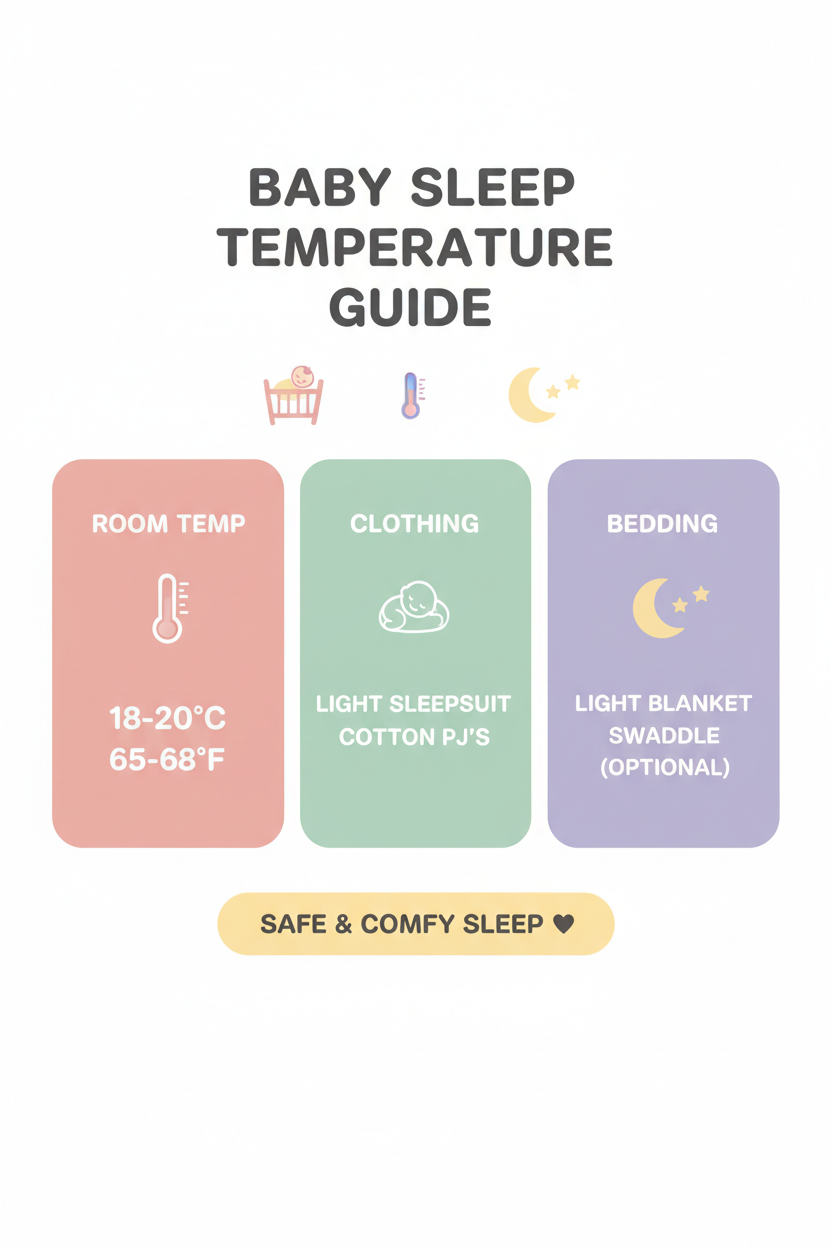
TOG ratings and room temperature
| Room temperature | NHS general reference | Layering reminder |
|---|---|---|
| 24–27°C / about 75–81°F | 0.5 TOG | Warm room: consider light or minimal base layers according to the garment. |
| 20–24°C / about 68–75°F | 1.0 TOG | Moderately warm: consider the full outfit. |
| 16–20°C / about 61–68°F | 2.5 TOG | Cooler room: avoid overdressing or adding a loose blanket. |
Source: NHS baby safer sleep advice. These are general reference ranges for commercially rated baby sleeping bags; Fahrenheit values are rounded conversions. They are not a universal safety threshold or a substitute for the product’s own instructions.
How does 1.5 TOG fit in?
1.5 TOG provides an insulation level between 1.0 and 2.5 TOG. The cited NHS chart does not provide a separate 1.5 TOG temperature band. Some BubblePanda 1.5 TOG styles include sleeves, so evaluate the complete outfit and follow the garment’s care and use instructions.
How to check for overheating
- Feel the baby’s chest or the back of the neck rather than judging from the hands and feet alone.
- Watch for sweating, flushed skin or a hot chest.
- Use appropriate layers and avoid indoor sleep hats for infants.
- Make sure the sleeping bag fits well around the neck and arm openings.

A safe sleep setup comes first
Place infants on their backs to sleep, use a firm, flat mattress with a fitted sheet and keep loose blankets, pillows and other soft objects out of the crib. Do not use weighted infant sleep products. If you are unsure which layers to use, consult your sleep sack’s instructions and your child’s healthcare professional.
Shop by warmth. Check the fit.
Find an option that suits the room and your child’s stage.
EXPLORE THE COLLECTION →GUIDANCE & SOURCES
NHS — Baby safer sleep · The Lullaby Trust — Dress for sleep · AAP — Safe Sleep
Educational information only. Product use should follow the specific garment’s instructions, its fit guidance, and your child’s needs. No sleep product eliminates sleep-related risks.


Leave a comment
This site is protected by hCaptcha and the hCaptcha Privacy Policy and Terms of Service apply.