
How Should My Baby Sleep During a Heatwave? A Parent's Guide to Staying Cool and Safe ☀️👶
A summer heatwave can make bedtime surprisingly stressful. One night your baby's room feels comfortable. The next night, the temperature barely drops after sunset, the air feels heavy, and you're standing next to the crib wondering:
“Is my baby too hot?”
“Should I still use the sleep sack?”
“What should my baby actually wear tonight?”
These questions become especially common during prolonged hot weather. Parents in warmer parts of the U.S. can have bedrooms that stay warm long after the outdoor temperature begins to fall, while families with older homes or uneven air conditioning may find that the nursery is several degrees warmer than the rest of the house.
Recent parent discussions reflect exactly this problem. Parents have described bedrooms reaching the mid-to-upper 70s, struggling with air conditioning, and wondering whether to use a 0.5 TOG sleep sack, lighter clothing, or no sleep sack at all.
Quick Answer

Why Heatwaves Make Baby Sleep So Difficult
Babies are more vulnerable to overheating than adults because they do not regulate body temperature in exactly the same way adults do. That's why summer sleep is not simply a matter of making your baby comfortable.
Safe Sleep guidance from the NIH's Safe to Sleep program specifically advises parents to avoid overheating, dress babies appropriately for the room temperature, and watch for signs such as sweating, flushed skin, or a chest that feels hot to the touch.
Your baby's sleepwear depends on several key factors:
- Room temperature: The actual temperature of the room where baby sleeps.
- TOG rating: The thermal resistance rating of the sleep sack.
- Base layers: What your baby is wearing underneath.
- Overnight changes: Whether the room temperature changes during the night.
- Individual tendency: Whether your baby naturally runs warm or cool.
Step-by-Step Solutions: How to Dress Your Baby During a Heatwave
Step 1: Check the Nursery Temperature First
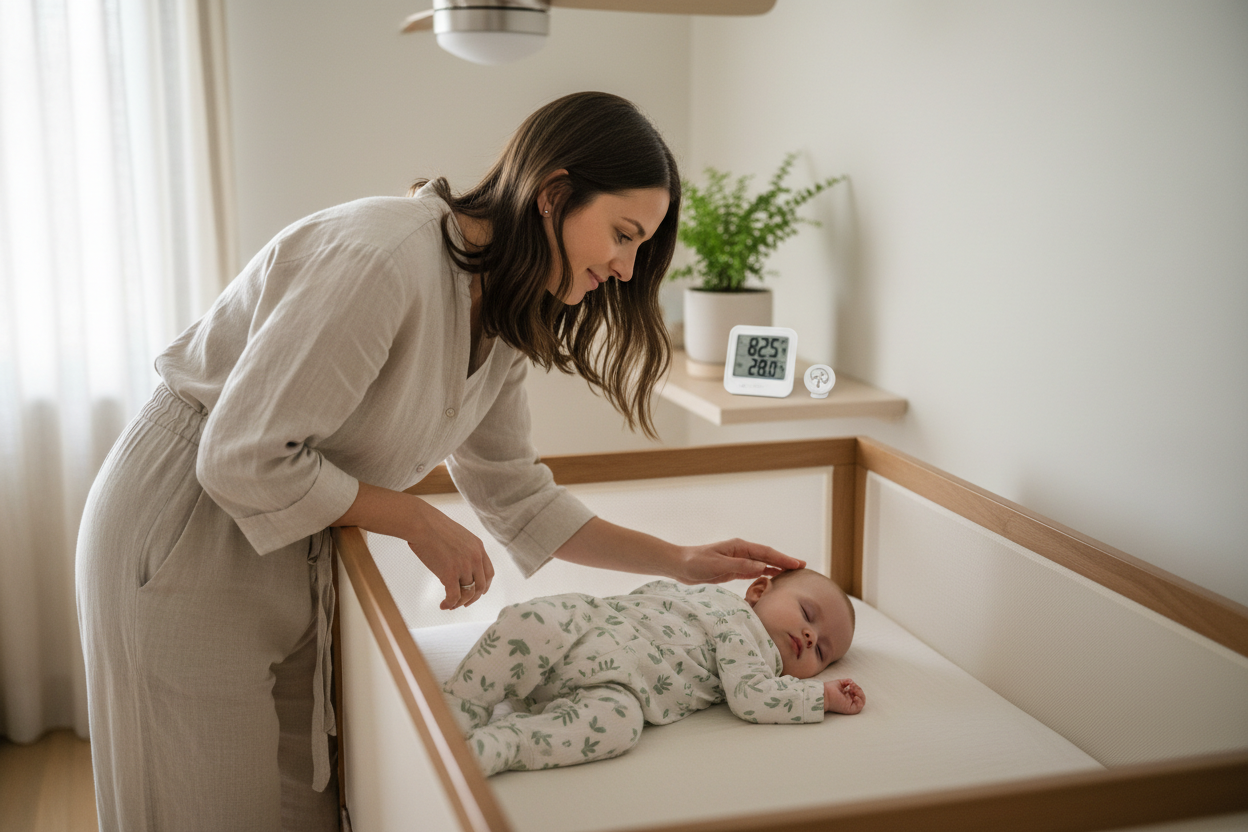
Before changing your baby's clothing, check the temperature where your baby actually sleeps. The temperature outside can be 95°F while the nursery is 74°F with effective air conditioning. Conversely, it can be 82°F outside while an upstairs bedroom remains much warmer overnight.
A simple room thermometer can help you make a more consistent decision instead of guessing based on how the weather feels outdoors.
Step 2: Look at the TOG Rating
TOG is a measure of thermal resistance used to describe the warmth of sleepwear and bedding products. A lower TOG generally means a lighter sleep sack, while a higher TOG provides more insulation.
You can use the Bubble Panda TOG Rating Chart as a starting point when comparing sleep sack warmth.
Step 3: Reduce Layers Before Removing Everything
If your baby's room becomes warmer than usual, consider reducing the overall warmth of the outfit:
- Switch from long-sleeve pajamas to a short-sleeve bodysuit.
- Choose a lighter TOG sleep sack.
- Remove unnecessary layers underneath the sleep sack.
- Avoid hats or extra coverings during indoor sleep.
Step 4: Check Your Baby, Not Just the Thermometer
If you are concerned that your baby is too warm, check the chest or upper back rather than relying only on hands and feet. Possible signs of overheating include:
- Sweating or damp hair.
- Flushed or unusually red skin.
- A chest or back that feels hot to the touch.
- Unusual restlessness or difficulty settling.
Step 5: Keep the Sleep Space Simple
Keep the sleep environment simple. For safe sleep, babies should sleep on a firm, flat sleep surface with a fitted sheet and without loose blankets, pillows, bumpers, or other soft objects in the sleep area. A wearable blanket or sleep sack can provide warmth without adding loose bedding.

Common Mistakes Parents Make During a Heatwave
3 Mistakes to Avoid:
Mistake #1: Dressing Baby Based on Outdoor Temperature
Your baby doesn't sleep outside. If the nursery is air-conditioned to 72°F, dressing for 95°F outdoor heat could leave them unnecessarily warm.
Mistake #2: Adding Layers Because Baby's Hands Feel Cool
Baby hands and feet naturally feel cooler than their core. Check the chest or upper back before adding layers.
Mistake #3: Assuming Bamboo Automatically Means “Cool Enough”
Fabric type is only one part of the equation. Construction, TOG rating, room temperature, and layers underneath all matter.
Bubble Panda Sleep Tip 🤍
Don't try to solve a hot-night problem by changing five things at once.
If your baby normally sleeps comfortably in a certain sleep sack and the room suddenly becomes warmer, make one reasonable adjustment at a time. For example, switch from long sleeves to a short-sleeve bodysuit underneath first. This makes it easier to understand what actually improved your baby's comfort.
Pediatrician Perspective
Safe sleep recommendations consistently emphasize avoiding overheating and overbundling. The NIH's Safe to Sleep program advises parents to dress babies appropriately for the room temperature and watch for sweating, flushed skin, or a hot chest.
During extreme heat, pay attention to symptoms that seem more serious than ordinary bedtime discomfort. If your baby appears unusually ill, has trouble breathing, is difficult to wake, or has a concerning temperature, seek medical advice promptly.
Parent Checklist: Before You Put Baby Down on a Hot Night
- ✓ I checked the actual temperature of the baby's sleep room.
- ✓ I checked the TOG rating of the sleep sack.
- ✓ I considered the clothing underneath.
- ✓ I removed unnecessary layers.
- ✓ Baby's head and face are uncovered.
- ✓ The crib has no loose blankets, pillows, or soft objects.
- ✓ I checked baby's chest or upper body for signs of overheating.
- ✓ The room has reasonable air circulation.
Myth vs Fact
Regional Tips for Hot U.S. Summers
Texas: Very hot outdoors with heavy A/C indoors. Dress for the nursery temperature, not the porch temperature.
Florida: High humidity can make warm nights heavier. Focus on lightweight, breathable layers and good ventilation.
California: Microclimates vary wildly. Check the actual bedroom temperature rather than relying on coastal or inland forecasts.
New York & Northeast: Older homes and upper floors trap heat overnight. Upstairs nurseries may need a lighter setup than lower floors.
What Should My Baby Wear During a Heatwave?
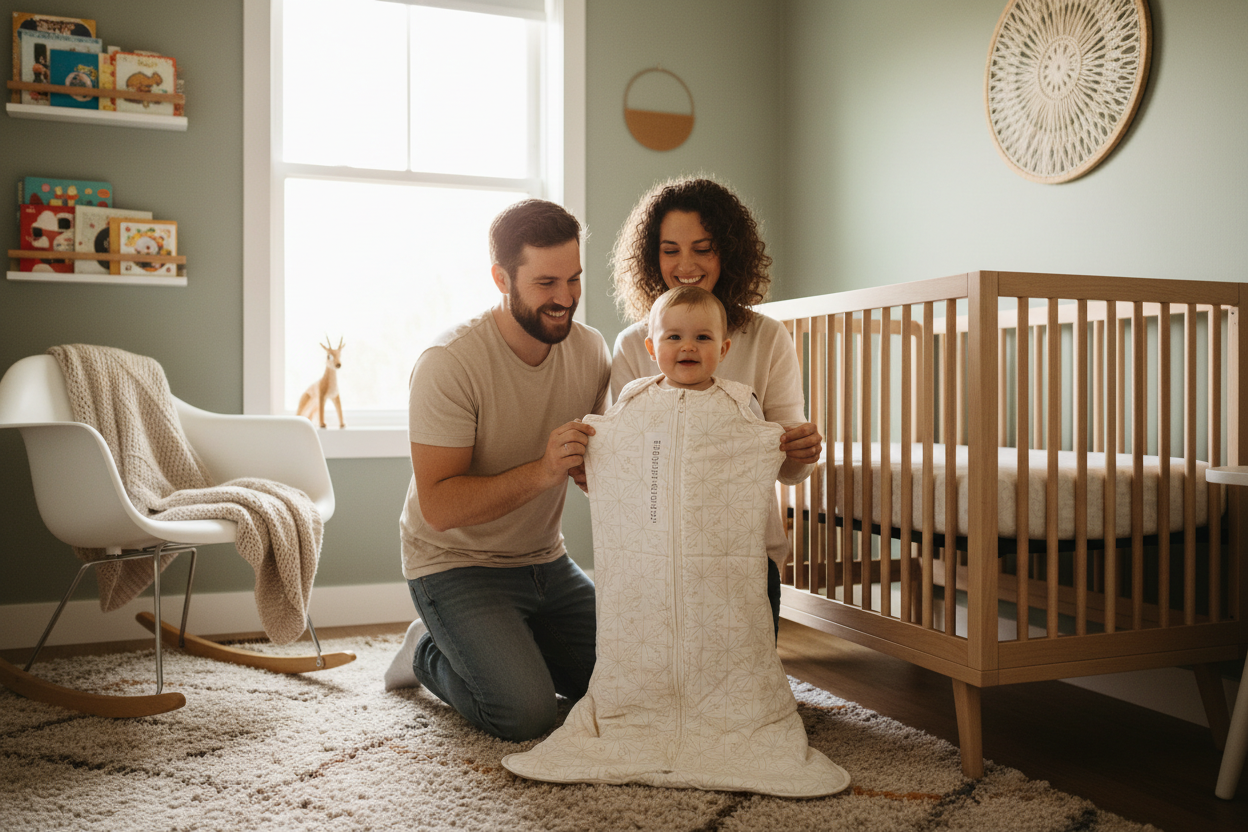
Think in terms of total warmth combination. For warm rooms, lightweight options like a 0.5 TOG sleep sack provide breathable comfort without adding excess warmth.
Explore Bubble Panda's Bamboo 0.5 TOG Sleep Sacks for lightweight summer sleepwear, or check the Bamboo 1.0 TOG collection for moderate room temperatures.

Related Reading
👉 Baby Sleep Sack TOG Rating Chart — Understand how TOG relates to sleep sack warmth.
👉 What Should Baby Wear to Sleep Tonight? — A practical guide to choosing sleepwear.
👉 Can Baby Sleep With a Fan On? — What parents should consider when using a fan at night.
👉 How to Keep Your Baby Cool During a Summer Heatwave — More practical hot-weather strategies.
👉 Shop Bamboo 0.5 TOG Sleep Sacks — Lightweight options for warm-room conditions.
Keep Baby Cool & Safe This Summer 🌿☀️
If summer nights have you second-guessing every layer, start with the room temperature, then choose sleepwear that matches it.
EXPLORE 0.5 TOG SLEEP SACKS VIEW TOG GUIDE


Laisser un commentaire
Ce site est protégé par hCaptcha, et la Politique de confidentialité et les Conditions de service de hCaptcha s’appliquent.