
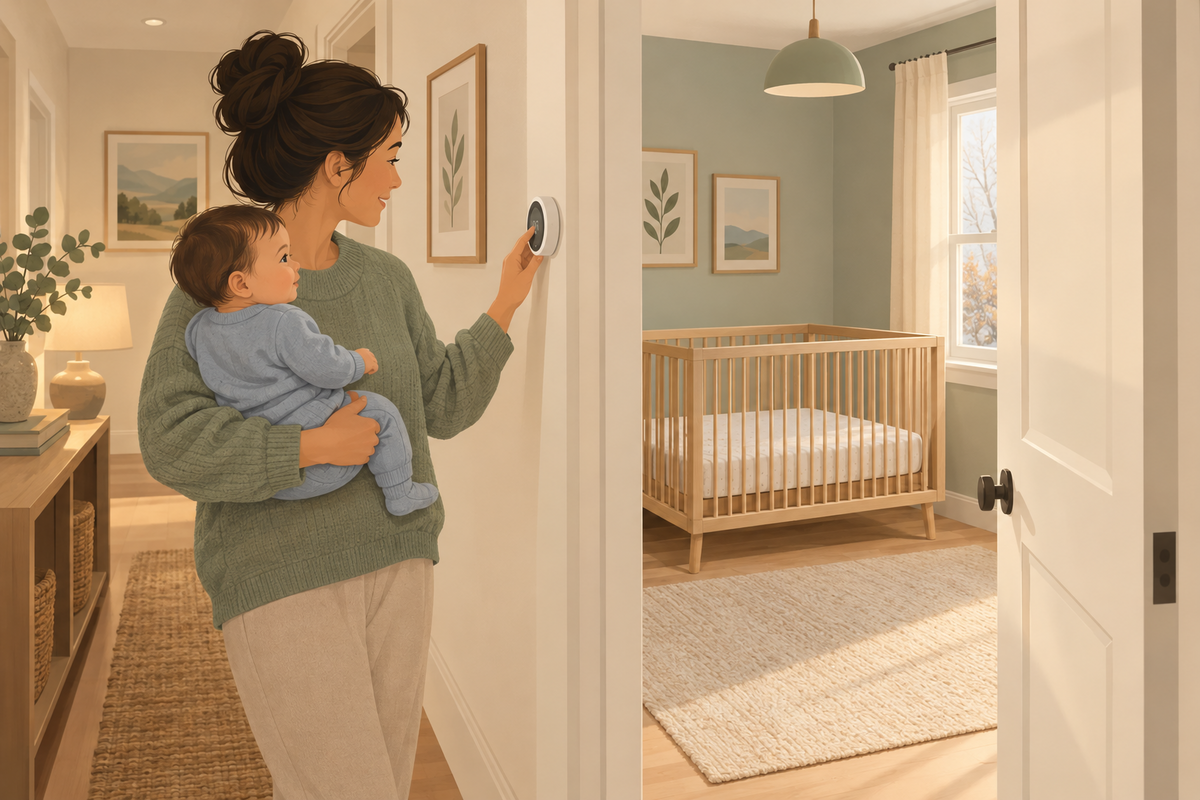
What matters more than the thermostat: your heating system, your baby's layers, and a safe place to sleep.
Yes, a baby can sleep in a room warmed by a properly maintained central heating system, provided the room stays comfortable and the baby is not overdressed. But a portable space heater is different: the U.S. Consumer Product Safety Commission (CPSC) advises turning portable heaters off while people are sleeping. Do not rely on a portable heater to run unattended beside a sleeping baby. Instead, focus on reliable home heating, a safe crib, age-appropriate clothing, and watching for signs of overheating.
Can a baby sleep with the heater on?
The first chilly evening arrives, the nursery feels cooler than it did last week, and suddenly bedtime comes with a new question: Should I keep the heat running all night?
It sounds like a simple yes-or-no question. In practice, the answer depends on which kind of heater you mean. A home’s central heating system and a plug-in portable electric heater have very different safety considerations. Before you tuck your baby in, it helps to separate those two situations.

What about central heating overnight?
Many families use a whole-home furnace, boiler, heat pump, or other fixed heating system to maintain indoor comfort during cold weather. Keeping that system operating at a comfortable setting overnight is different from leaving a portable heater running unattended.
With fixed heating, focus on proper installation and maintenance, avoiding an overheated nursery, and ensuring the home has working alarms. If your home uses fuel-burning heating equipment, CPSC recommends professional inspection of these systems each year.
- Check the actual temperature near the sleep space rather than assuming the hallway thermostat tells the whole story.
- Keep the crib away from direct blasts of hot air, very hot radiators, exposed pipes, and reachable heating controls.
- Check that the home has working smoke alarms and carbon monoxide alarms as appropriate.
- If heat is inconsistent or the nursery is unusually cold, address the heating problem itself rather than improvising with unsafe devices.
Can I leave a space heater on in the nursery all night?
No—not while you or your baby are sleeping. In its January 2026 winter safety guidance, the CPSC tells consumers to turn off portable heaters when sleeping. That includes electric space heaters. A safety shutoff feature or thermostat is not a reason to ignore that guidance.
If an adult uses an appropriate electric space heater briefly while awake and actively supervising it, the CPSC gives additional safety precautions:
- Keep the heater at least three feet from curtains, bedding, furniture, and other combustible materials.
- Plug it directly into a wall outlet—never an extension cord or power strip.
- Turn it off before leaving the area or going to sleep.
- Keep the heater and its cord inaccessible to children; follow the manufacturer’s instructions.
Fuel-burning portable heaters add combustion and carbon monoxide concerns. Never bring outdoor heating or cooking equipment into a nursery to warm it. For an inadequate or unreliable heating system, seek appropriate housing, building, or heating-system assistance rather than treating a portable heater as an overnight workaround.

How warm should the nursery be?
You may have seen charts that present a single “perfect” nursery temperature. In reality, major U.S. safe-sleep guidance does not guarantee that one thermostat setting is right for every baby or home. What matters is avoiding overheating while keeping your baby appropriately dressed for the room.
A practical way to think about bedtime warmth is to check three things together:
- The room: Is the nursery comfortable, and does the temperature change overnight?
- The clothing: Are pajamas and the sleep sack together providing too much or too little warmth?
- Your baby: Is the chest hot, is your baby sweating, or does the skin look flushed?
The NIH Safe to Sleep program advises dressing babies for the temperature of the room and watching for overheating. It also recommends keeping babies’ heads and faces uncovered and avoiding hats during indoor sleep.
What should my baby wear when the heat is on?
Start with the temperature inside the room, not the weather forecast. A cold night outdoors can still mean a warm nursery if the heating system is running. Likewise, a warm set of pajamas underneath a higher-TOG sleep sack may provide too much insulation in a heated room.
A TOG rating describes thermal insulation; it does not guarantee that a product will prevent overheating. Check the manufacturer’s fit and layering guidance and reassess clothing when indoor conditions change.
- Choose sleepwear that fits correctly and does not cover your baby’s face.
- For infants, use a properly fitting non-weighted wearable blanket if an extra sleep layer is needed instead of putting loose blankets in the crib.
- Do not add a hat for indoor sleep.
- If your baby’s chest feels hot, or your baby is sweating or flushed, reassess the layers and room temperature.
Think of a sleep sack as one layer in the full bedtime outfit—not as a way to make a room warmer or correct a heating problem. Start with the room, then review the TOG and the clothing underneath.
If you need help comparing warmth levels, our TOG Rating Chart provides product guidance. Pair it with the baby’s actual sleep environment rather than using it as a medical temperature standard.
How can I tell if my baby is getting too hot?
Heating and heavy layers can make a baby too warm even when it is freezing outside. The NIH describes sweating, flushed or hot skin, and a chest that feels hot as signs parents should watch for.
Check your baby’s chest or upper body and how they seem overall; hands and feet alone may not reflect their core warmth. Remove or adjust unnecessary layers and reassess the sleep environment if your baby seems overheated.
Myth vs. Fact: Three winter sleep assumptions
| Myth | Fact |
|---|---|
| “Any heater can run safely all night.” | Central heating and portable heaters are different. CPSC says to switch off portable heaters during sleep. |
| “A colder winter night always needs a thicker sleep sack.” | The indoor room conditions and total clothing layers matter more than the outdoor forecast. |
| “Extra blankets in the crib are the easiest way to add warmth.” | For infants, use appropriate clothing or a wearable blanket instead of loose bedding. |
A simple warm-and-safe bedtime routine
You do not have to redo your baby’s entire routine when the heating season starts. Small checks are more useful than guessing.
- Make sure your home heating system is functioning properly and alarms are working.
- If you used a portable space heater, switch it off before anyone goes to sleep.
- Check the actual nursery environment and note if it tends to warm up or cool down during the night.
- Choose a suitable pajama-and-sleep-sack combination without adding loose bedding.
- Place your baby on their back in a firm, flat, clear crib, bassinet, or play yard.
- Before settling in for the night, check for signs that your baby is too warm.

Pediatrician Perspective: Safety guidance, not a magic thermostat number
Pediatric safe-sleep recommendations focus on preventing overheating, keeping the baby’s head and face uncovered, using a firm and flat sleep surface, and removing loose bedding from infant sleep spaces. Those principles still apply when the heating is running.
This section summarizes publicly available safe-sleep guidance; it is not a personal review or endorsement by a named pediatrician. If your baby was born prematurely or has a medical condition that affects temperature or breathing, ask your child’s clinician for individualized advice.
What if my home heats unevenly?
A nursery above a garage, a bedroom with large windows, or a room far from the thermostat can feel different from the rest of the house. Apartments with building-controlled heating may have the opposite problem: the nursery is too warm even when the outside air is chilly.
In either situation, the goal is not to chase one exact number. Check the room where your baby actually sleeps. If you cannot keep it reasonably comfortable, contact your building manager or a qualified heating professional instead of using unsafe overnight portable heat. Never use a gas oven, grill, or outdoor generator to heat a room.
Where a sleep sack fits into the picture
A sleep sack can be part of a simple, predictable bedtime wardrobe. It does not make a space heater safe, and no fabric or TOG rating can replace a properly heated home. The useful question is whether your baby’s complete outfit is suited to the indoor conditions.
If a wearable blanket fits your baby’s age and needs, you can browse Bubble Panda sleep sacks or compare our TOG guidance. Choose a properly fitting, non-weighted option and follow the product instructions.
Related Reading
More practical baby sleep questions: The Slumber Lab.
Frequently Asked Questions
Can I leave central heating on while my baby sleeps?
A properly maintained whole-home heating system can run overnight to keep the nursery comfortable. Pay attention to the actual room temperature, safe sleep clothing, and working smoke and carbon monoxide alarms as appropriate for your home.
Is it safe to leave a portable space heater on overnight in a baby’s room?
No. The U.S. Consumer Product Safety Commission advises turning off portable heaters while sleeping. Keeping one three feet from bedding and furniture is an additional precaution while it is operating under supervision, not permission to leave it on overnight.
What temperature should I set the heater for my baby?
There is no single official temperature that guarantees safe infant sleep. Aim for a comfortable room, check the actual nursery conditions, dress your baby appropriately, and watch for sweating, flushed skin or a hot chest.
Should I put an extra blanket in the crib when the weather gets cold?
No. For infants, keep loose blankets and soft bedding out of the sleep area. Instead, use suitable sleep clothing or a correctly fitting non-weighted wearable blanket based on the room conditions.
Can a baby overheat even if it is cold outside?
Yes. Heating and too many clothing layers can make a baby too warm even in winter. Evaluate the indoor temperature and look for signs such as sweating, flushed skin or a chest that feels hot to the touch.
The takeaway 🌙
Keeping a baby comfortably warm does not mean running every kind of heater overnight. Properly maintained central heating can help maintain a comfortable nursery; portable heaters should be switched off for sleep. Then keep the infant sleep space clear, dress your baby for the room, and watch for overheating. The safest routine is one you can follow consistently—not a complicated set of gadgets.
Explore more sleep guidance for every season.
Explore The Slumber Lab →Educational content only. It does not replace individualized pediatric or home-safety advice. Sources reviewed October 2026.


Laisser un commentaire
Ce site est protégé par hCaptcha, et la Politique de confidentialité et les Conditions de service de hCaptcha s’appliquent.