
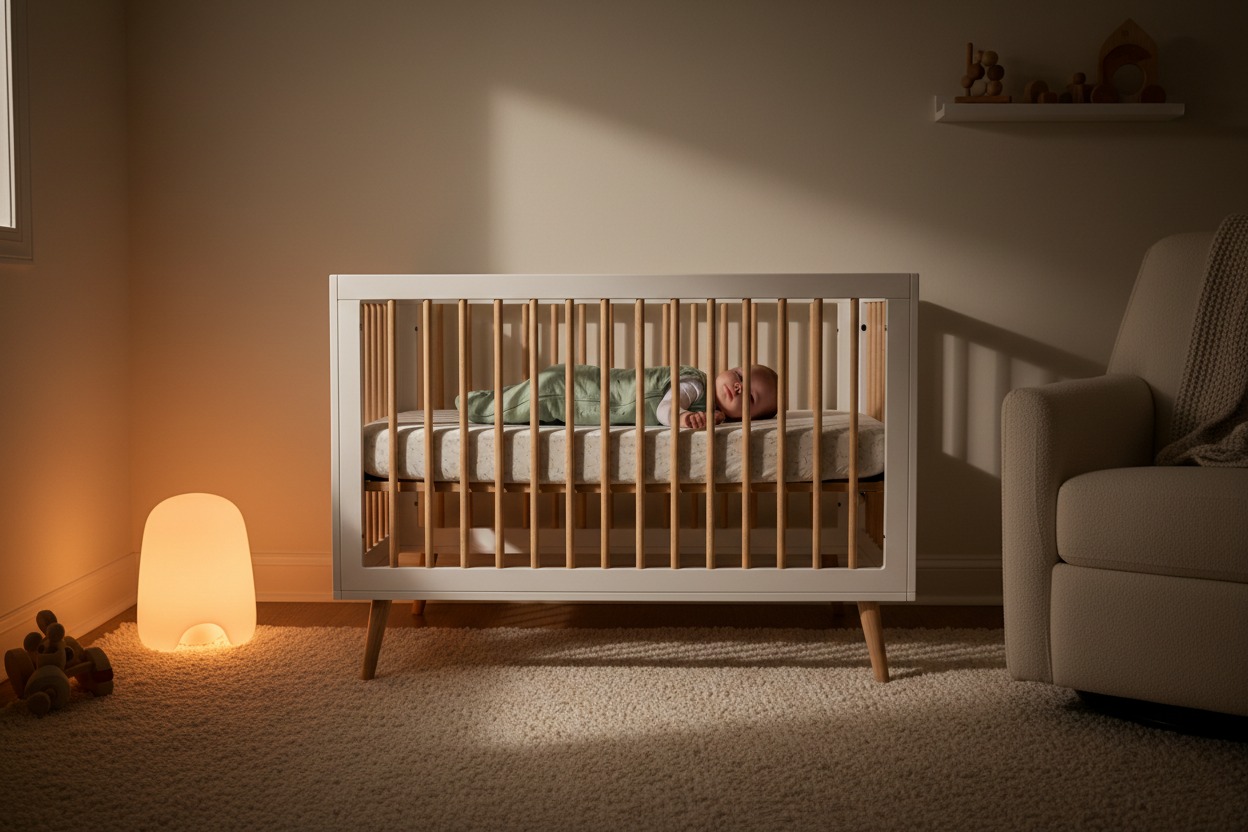
Should Babies Sleep With a Night Light? 🌙💡
A soft night light can make midnight feedings and diaper changes much easier, but many parents wonder if leaving one on all night will affect their baby's sleep.
Is complete darkness always best? Can a night light interfere with melatonin? And what color of light is safest for babies?
For most babies, a dark nursery remains the ideal sleep environment. However, a dim, warm-colored night light can be helpful when used correctly, especially during overnight care.
The key is choosing the right brightness, color, and placement so the light supports your routine without overstimulating your baby.
---Quick Answer
 ---
---
Why Light Matters During Sleep
Light helps regulate your baby's developing circadian rhythm. As babies grow, their bodies begin using darkness as a signal that it's time to sleep and light as a signal to wake up.
A bright nursery during the night may make it harder for some babies to settle back to sleep after feedings or diaper changes.
That's why many pediatric sleep experts recommend keeping nighttime lighting as dim as possible while still allowing parents to care for their baby safely.
Quick fact: Warm amber or red night lights generally produce less sleep-disrupting light than bright white or blue LEDs.---
Benefits of a Night Light
- Makes nighttime feedings easier.
- Provides enough light for diaper changes.
- Reduces the need to turn on bright overhead lights.
- Helps parents move safely around the nursery.
- Can support a calm nighttime routine when used properly.
Choosing the Right Night Light
--- ---
---
Bubble Panda Expert Tip 🤍
A comfortable nursery combines several gentle sleep cues—a cool room, breathable bamboo sleepwear, a predictable bedtime routine, and if needed, a dim amber night light that doesn't overpower the room.
Pediatrician Perspective
For healthy babies, complete darkness is generally considered the best sleep environment because it supports the body's natural sleep-wake cycle. However, a very dim amber or red night light can be useful for nighttime care without significantly disrupting sleep.
The most important factor is brightness. If you can comfortably read a book across the room, the light is probably brighter than necessary for overnight feedings or diaper changes.
Whenever possible, keep nighttime interactions calm, quiet, and dimly lit to help your baby return to sleep more easily.
How to Use a Night Light Safely
A few simple adjustments can help your night light support sleep instead of interrupting it.
Parent Checklist
For nighttime feedings and diaper changes:
- ✓ Use a dim amber or red night light.
- ✓ Keep the nursery quiet and calm.
- ✓ Avoid turning on overhead lights.
- ✓ Place the night light away from the crib.
- ✓ Dress your baby in breathable sleepwear before bedtime.
- ✓ Return the room to darkness once your baby is settled.

Myth vs Fact
Regional Tips
Alaska: During seasons with extended daylight, blackout curtains combined with a dim amber night light can help create clear bedtime cues.
California: Summer sunsets may occur after your baby's bedtime, making a darker nursery especially helpful.
New York City: Apartment lighting from nearby buildings may enter the nursery, so blackout curtains can work well alongside a low-level night light.
Florida: During nighttime thunderstorms, a gentle amber night light may help parents care for babies without switching on bright ceiling lights.
Product Recommendation
A dim night light can make overnight care easier, but it works best alongside a complete sleep environment that encourages calm, comfortable rest. The right nursery temperature, a predictable bedtime routine, and breathable sleepwear all play important roles.
For warm nurseries, many parents choose the Bubble Panda Bamboo 0.5 TOG Sleep Sack because its lightweight bamboo fabric helps babies stay comfortably covered without unnecessary warmth.
If you're building a year-round sleep routine, explore the Bubble Panda Standard Sleep Sack Collection to find breathable sleep sacks designed for every season and every stage.
Not sure which TOG rating is best? Visit our TOG Rating Chart to match your baby's sleepwear to the nursery temperature.
Related Reading
👉 Do Blackout Curtains Help Babies Sleep?
👉 Should Babies Sleep With White Noise?
Final Answer
Yes, babies can safely sleep with a night light when it's dim, warm-colored, and used thoughtfully. However, complete darkness is still the preferred sleep environment for many babies because it better supports natural sleep cues.
If you need light for nighttime feedings or diaper changes, choose a low-brightness amber or red night light, position it away from the crib, and avoid turning on bright overhead lights.
Combined with a cool nursery, breathable sleepwear, and a consistent bedtime routine, a gentle night light can help both babies and parents enjoy calmer nights.
Frequently Asked Questions
Is it okay to leave a night light on all night?
Yes, as long as it's very dim, warm-colored, and doesn't shine directly toward your baby's crib. Many parents prefer to keep it only bright enough for safe nighttime care.
What color night light is best for babies?
Amber and red lights are generally considered the most sleep-friendly because they produce less stimulating light than bright white or blue bulbs.
Should newborns sleep in complete darkness?
Complete darkness is ideal for many babies, but a dim amber night light can be useful during overnight feedings and diaper changes without significantly disrupting sleep.
Create a Calm Nursery for Better Sleep 🌙💚
Pair a gentle bedtime routine with a breathable Bubble Panda bamboo sleep sack, the right nursery temperature, and soft lighting to help your little one sleep comfortably through the night.
SHOP ALL SLEEP SACKS VIEW TOG GUIDE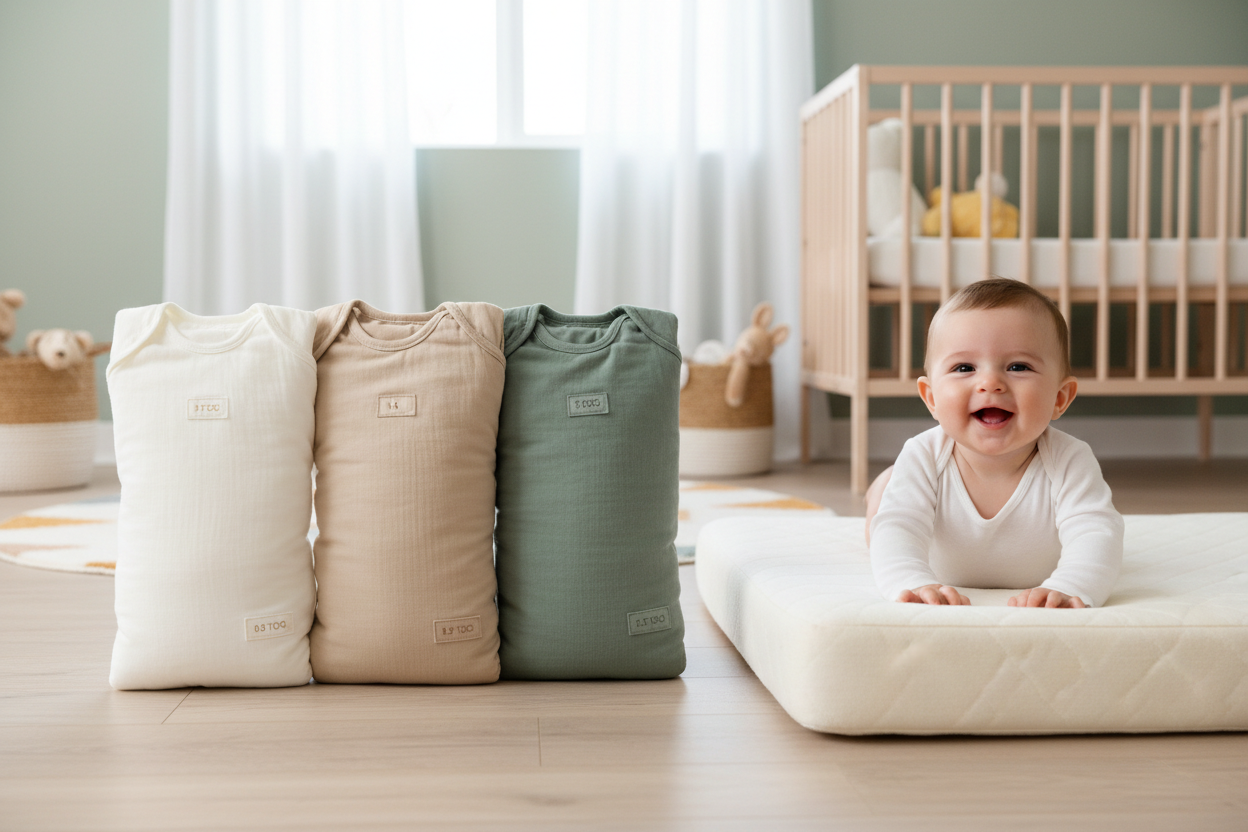


Laisser un commentaire
Ce site est protégé par hCaptcha, et la Politique de confidentialité et les Conditions de service de hCaptcha s’appliquent.