
BUBBLE PANDA · THE SLUMBER LAB
When Should You Stop Using White Noise for Your Baby?
A gentle, practical guide to finding more flexibility in your family's sleep routine.
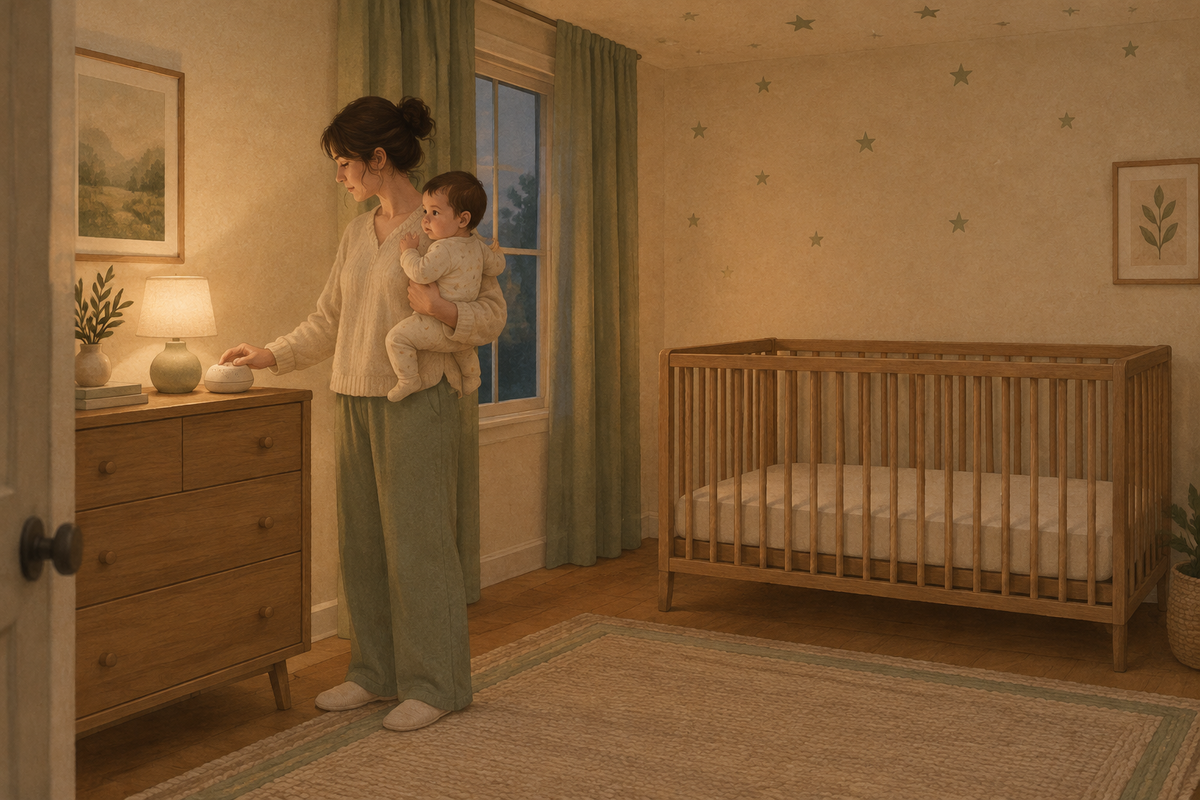
You turn on the little sound machine, dim the lights, and your baby seems to know that bedtime has arrived. Then a question pops up: Will they always need that humming sound to fall asleep?
It's a reasonable thing to wonder, especially if you have forgotten the machine on a trip—or have heard stories about older children who still enjoy sleeping with it. But a familiar sound does not automatically mean your baby has a problem. What matters is how you use it, whether it is actually helping, and whether you'd like a quieter routine.
Is There a Recommended Age to Stop White Noise?
The AAP guidance reviewed for this article does not set a universal age at which every family has to stop. Instead, it focuses on sound exposure: infant sleep machines can be too loud, and the safer approach is to keep them far away, play them at low volume, and limit the time they run.
That means the answer is not automatically 'stop at six months' or 'keep going until toddlerhood.' If you want to phase it out, you can start experimenting with a quieter routine now. If sleep is especially difficult or you have hearing concerns, ask your pediatrician for guidance tailored to your child.

Why Does My Baby Seem to Need White Noise?
A repeated sound can become part of a familiar bedtime pattern, along with a darkened room, a cuddle, a short story, or getting dressed for bed. Some families also use it to make abrupt household noises less noticeable—think dishes clinking after bedtime or a neighbor's dog barking.
But don't confuse a routine with a guarantee. There is no strong basis for promising that white noise makes every baby sleep longer, and a baby who wakes frequently may be hungry, uncomfortable, developing new skills, or simply moving through normal sleep cycles.
- The sound may be a cue: Your baby hears it most nights before sleep.
- The sound may mask noise: Your home is noisy around nap time.
- The sound may not matter much: Your baby occasionally sleeps well without it.
- Waking may have another cause: Changing the sound alone may not change the night.
How to Wean Your Baby Off White Noise Gently
You do not have to choose between turning it off abruptly and leaving it on forever. The following is a flexible at-home experiment, not a medically validated schedule. You can use fewer days, more days, or stop if your baby finds the change upsetting.
| When | What to try | What to keep consistent |
|---|---|---|
| Bedtimes 1–2 | Lower the volume to a quieter background level, and keep the machine far from the crib. | Usual feeding and bedtime sequence. |
| Bedtimes 3–4 | Use a short timer or turn it off after the initial settling period. | Same lights, story, and age-appropriate sleep clothing. |
| Bedtime 5 onward | Try one bedtime or nap without the sound machine. | Same calm space and responsive caregiving. |
| If sleep becomes harder | Pause, simplify the experiment, or try again later. | A safe sleep space and your baby’s actual needs. |
If your machine has sudden alerts, a loud startup chime, or volume jumps, avoid those settings. A gradual transition should feel less disruptive, not introduce unexpected blasts of sound.

What If My Baby Wakes Up When the Sound Stops?
First, check the usual possibilities: does your baby need feeding, a diaper change, physical comfort, or medical attention? A sound machine should never replace responding to a baby's needs. If a quiet room suddenly exposes loud traffic or household activity, that environmental change may also matter.
- Pause briefly and observe whether your baby is resettling on their own, when appropriate for their age and needs.
- Respond to crying or signs of hunger and discomfort as you normally would.
- Review whether the room has become noisy or bright when the machine stops.
- If the experiment is disrupting rest, make a smaller change on another night.
For persistent sleep difficulties, unusual sensitivity to sound, or hearing concerns, speak with your child's pediatrician. You do not need to solve every nighttime waking with a device.
Is It Safe to Leave White Noise On All Night?
This deserves a separate answer from whether white noise helps your baby settle. The AAP recommends keeping infant sound machines away from the baby's head, at low volume, and running for a short time only. Leaving one close to the crib at high volume for hours is not a good way to use it.
If you've been using a machine overnight, review its placement, volume, and timer settings. A sound-level app may offer a rough clue, but it is not a substitute for proper measurement or for keeping the device quiet and distant. A machine should never go inside the crib, and power cords must stay out of reach.
The research cited by the AAP found that some infant sleep machines could produce surprisingly high sound levels at maximum settings. This is a reason for caution—not proof that every properly used device has caused hearing damage.
What Can Replace White Noise in a Bedtime Routine?
The strongest alternatives are usually simple, repeatable actions rather than buying something else. Keep a predictable order: lower the lights, change clothes, offer age-appropriate feeding, share a calm moment, then place your baby in a safe sleep space.
- A familiar short story or song during the pre-sleep routine, not continuous loud music.
- Dimmer light if brightness is a problem; see our guide to blackout curtains.
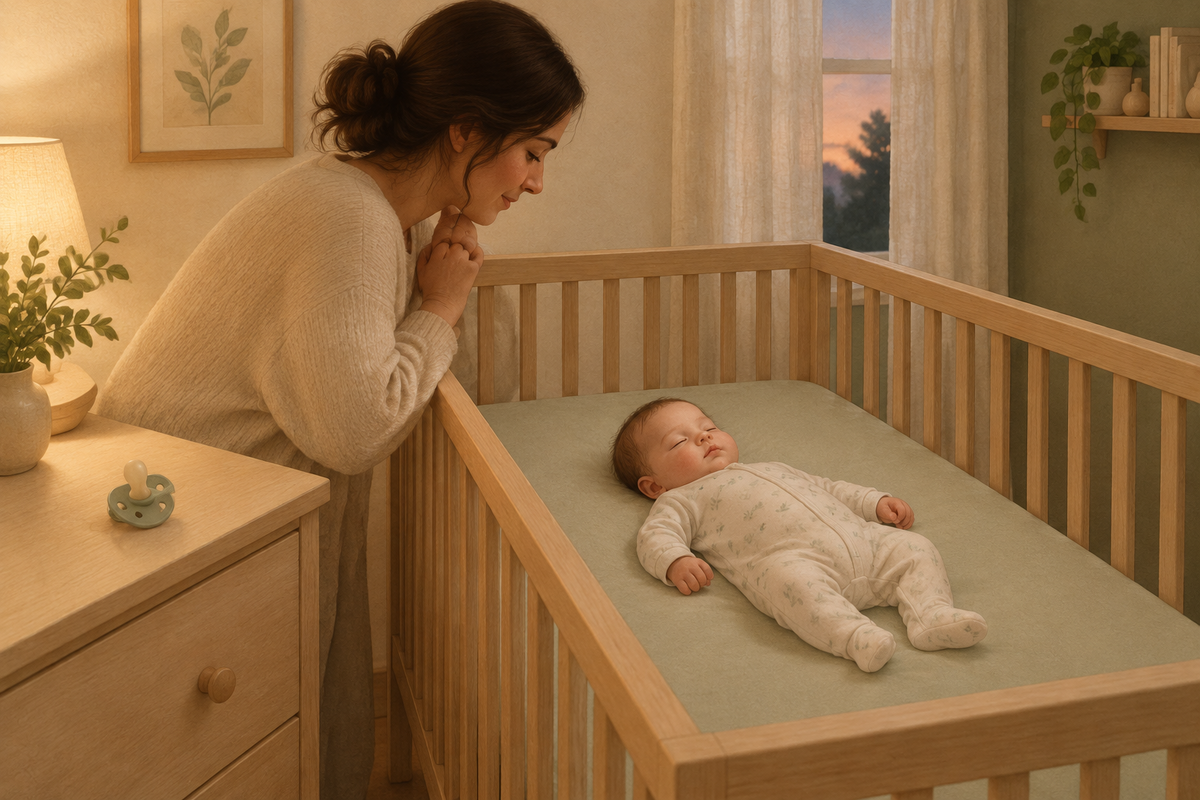
- A predictable sleep setting with a firm, flat mattress and a clear crib.
- Comfortable clothing suited to room conditions. A correctly fitted, non-weighted wearable blanket may be one option instead of loose bedding.
If you want help choosing wearable sleep clothing, you can browse Bubble Panda sleep sacks or compare warmth using the TOG rating chart. Neither clothing nor white noise guarantees longer sleep; these are simply parts of a comfortable, safe routine.

Common Mistakes to Avoid
- Turning the volume up to cover every sound in the house. Louder is not automatically better.
- Putting a sound machine, speaker, plush sound toy, or loose electrical cord in the baby's crib.
- Treating one rough night without white noise as proof your child can never sleep without it.
- Changing several things at once—bedtime, feeding, naps, lighting, and sound—then not knowing what helped.
- Assuming the sound machine is the cause of every night waking.
Myth vs. Fact: White Noise and Baby Sleep
| Myth | What we can responsibly say |
|---|---|
| Every baby needs a sound machine. | Some babies settle with it; others do fine without it. |
| A sleep cue is the same as addiction. | A familiar bedtime association is not proof of a medical addiction. |
| Louder white noise makes sleep safer. | AAP guidance favors lower volume, greater distance, and shorter use. |
| You must stop at one exact age. | The AAP guidance reviewed here does not specify a universal stopping birthday. |
Parent Checklist: Before Tonight
- Is the sound machine well away from the baby, with any cords completely out of reach?
- Is the volume low, with no startling chimes or sudden changes?
- Can I set a shorter timer rather than leave the device playing unnecessarily?
- Have I kept the room safe: baby on their back, firm flat surface, and no loose bedding?
- Am I keeping the rest of bedtime familiar while trying one small change?
- Have I checked feeding and comfort needs before blaming white noise for a wake-up?
Frequently Asked Questions
At what age should I stop white noise for my baby?
The AAP guidance referenced here does not specify a universal stopping age. If your family wants to stop, you can try a gentle transition and prioritize low sound levels, distance from your baby, and limited duration whenever a machine is used.
Can I leave white noise on all night for my baby?
The AAP recommends keeping infant sleep machines far from the baby, at low volume, and using them for only a short time. Rather than assuming overnight playback is best, consider a timer or a shorter session and ask your pediatrician if you need individualized advice.
How do I wean my baby off a sound machine?
Try lowering the volume over several bedtimes, shortening the time it plays, and keeping other sleep cues consistent. This is a practical approach, not a medically validated schedule, so adjust it to your baby.
Will my baby become addicted to white noise?
Familiar background sound can become a bedtime cue, but that does not establish a medical addiction. If you want more flexibility, try quiet naps or a gradual reduction in sound while maintaining a calm, safe sleep routine.
What if my baby wakes up when the white noise stops?
First check whether your baby needs feeding, comfort, or care. A sound change may be one factor, but night waking has many possible causes. You can slow down the transition and discuss persistent sleep concerns with your pediatrician.
Related Reading & Helpful Resources
If you're revisiting the whole sleep environment rather than just the sound machine, these related guides may help:
- Do Blackout Curtains Help Babies Sleep Better?
- Why Does My Baby Wake Up After 30 Minutes?
- TOG Rating Chart
- Explore More Articles in The Slumber Lab
For safety information about the sleep space itself, visit NIH Safe to Sleep. This is general infant-sleep guidance; it does not recommend a white-noise weaning schedule.
The Takeaway: Quieter Can Be a Gradual Choice
You don't need a deadline to try something different. If white noise has become part of bedtime, start with safer use—low volume, distance, and limited duration—then experiment with turning it down or off while keeping other comforting routines in place. Some babies adapt quickly; others need a slower pace. The goal is a calm, safe environment, not a perfect bedtime performance.


Laisser un commentaire
Ce site est protégé par hCaptcha, et la Politique de confidentialité et les Conditions de service de hCaptcha s’appliquent.