
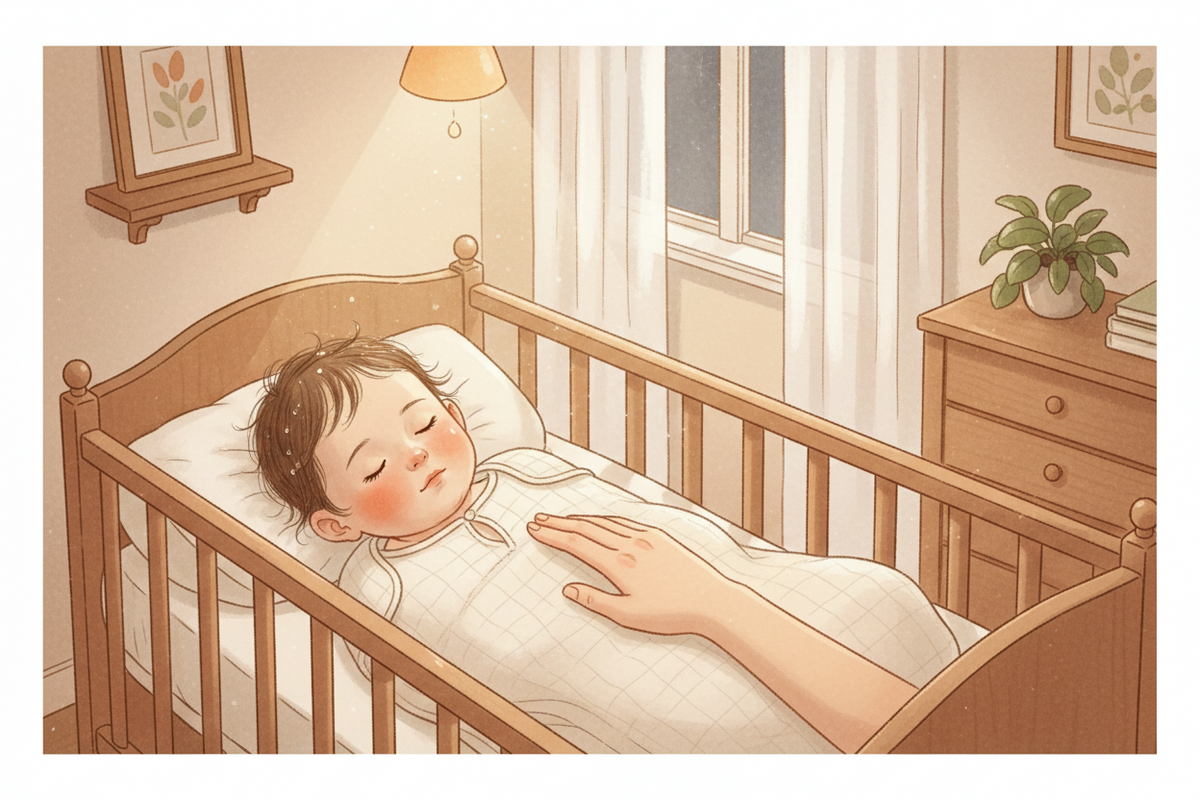
Why Is My Baby Sweating While Sleeping?
Quick Answer
If your baby is sweating during sleep, the first thing to check is whether they may be getting too warm. Sweating, damp hair, a hot chest, or flushed skin can be signs of overheating. Check your baby's chest or upper back rather than relying only on their hands and feet, then look at the room, clothing layers, and sleep sack together. The American Academy of Pediatrics recommends avoiding overheating and generally dressing babies in no more than one extra layer compared with an adult in the same environment.
Why Does My Baby Sweat While Sleeping?
You finally get your baby down, walk away quietly, and come back later to find damp hair, a sweaty neck, or pajamas that feel surprisingly warm.
And then comes the question almost every parent has asked at some point: "Is my baby too hot?"
Sometimes, yes. Babies can become too warm when the room, clothing, sleepwear, and sleep sack add up to more insulation than they need.
The American Academy of Pediatrics identifies sweating, a hot chest, and flushed skin as possible signs that a baby is overheating. Overheating during infant sleep should be avoided.

But sweating does not automatically tell you exactly why your baby is warm. The room may have become warmer overnight, your baby may be wearing too many layers, or the sleep sack may simply be too warm for the current conditions.
The goal isn't to make your baby cold. It's to create a comfortable sleep environment without excessive warmth.
Don't use your baby's hands or feet as your main temperature test. They can feel cool even when your baby's core body is comfortably warm. Check the chest or upper back and look at the whole sleep environment.
How Can I Tell If My Baby Is Too Hot?
Look for a combination of signs rather than one isolated clue.

- Sweating or noticeably damp skin
- Damp hair, especially around the head or neck
- A chest or upper back that feels hot
- Flushed or unusually warm-looking skin
- Heat rash or prickly-looking irritation
- Unusual discomfort or changes from your baby's normal behavior
The American Academy of Pediatrics notes that sweating, a hot chest, and flushed skin can indicate overheating. Its safe-sleep guidance also emphasizes avoiding excessive warmth during infant sleep.
If your baby's hands or feet feel cool, that alone does not necessarily mean your baby is cold. Their chest or upper back gives you a more useful picture of their overall warmth.
Step-by-Step: What to Do If Your Baby Is Sweaty
If you notice your baby is sweaty, start with a simple check rather than changing everything at once.

1. Check the Chest or Upper Back
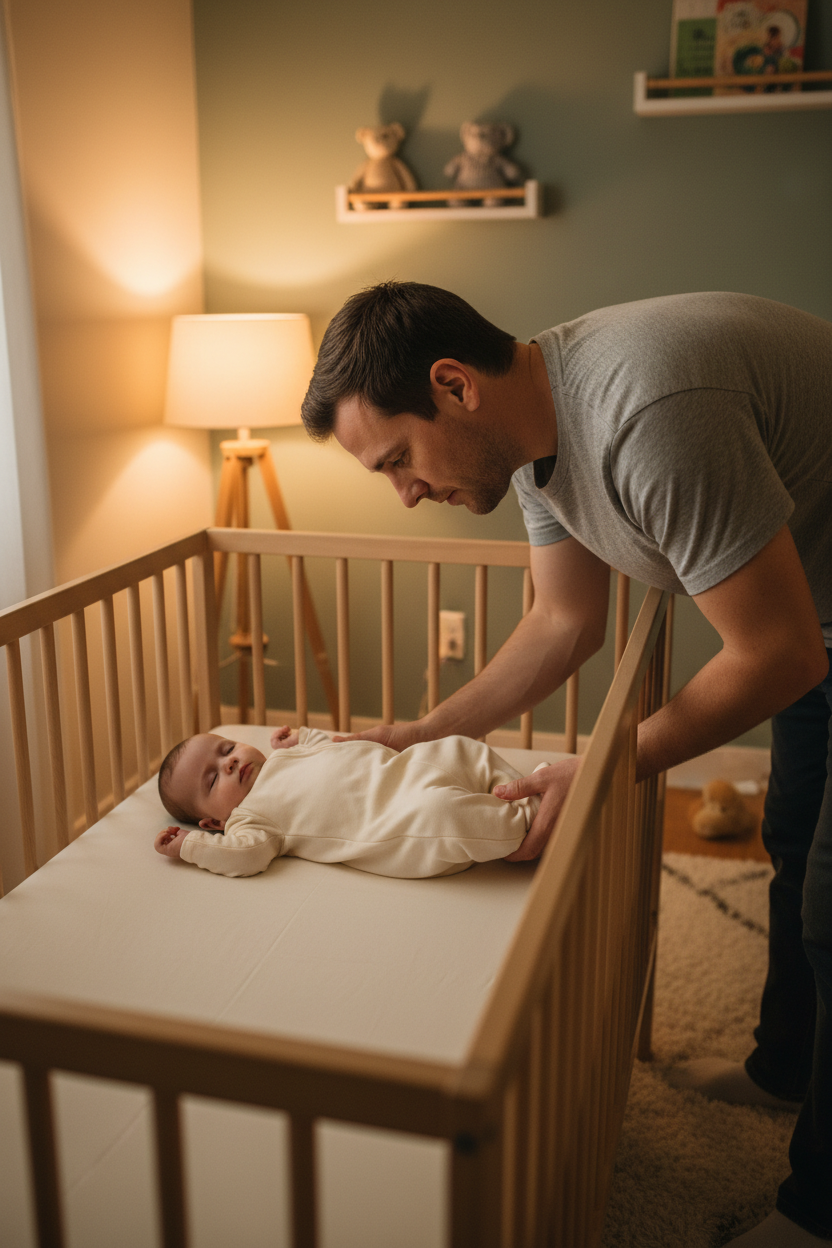
Gently check your baby's chest or upper back.
If the skin feels hot and your baby is sweaty, take that as a reason to reassess the sleep layers rather than simply adding or removing clothing based on how their hands feel.
2. Look at Everything Your Baby Is Wearing
Count the layers from the inside out:
- Diaper
- Onesie or bodysuit
- Pajamas or sleeper
- Sleep sack
- Any additional wearable layer
It's easy to think about each piece individually. But your baby experiences all of those layers together.
The AAP's general guidance is that babies usually need no more than one additional layer compared with what an adult would comfortably wear in the same environment.
3. Consider the Sleep Sack's TOG Rating
A sleep sack's TOG rating is a useful way to think about how much warmth and insulation the sleep sack provides.
A higher TOG generally means more insulation, while a lower TOG is designed for warmer conditions. That means the same sleep sack may not be the right choice for every season, room, or outfit underneath.
Instead of asking, "Which sleep sack is the warmest?", ask: "Which combination of room conditions, clothing, and TOG makes sense tonight?"
For a quick reference, see our Baby Sleep Sack TOG Rating Chart .
4. Check Whether the Room Changed Overnight
A room that feels comfortable at bedtime can feel very different a few hours later.
This is especially common when:
- The heater turns on overnight
- The air conditioner cycles off
- The outdoor temperature changes
- Your baby sleeps in a warmer part of the room
- The crib is near a heat source or direct sunlight
Rather than changing your baby's clothing every time they wake sweaty, look at the room and sleepwear together.
5. Make One Small Adjustment
If your baby is clearly too warm, avoid making several changes at once. Consider removing one layer or choosing a lighter sleepwear combination appropriate for the conditions, then observe how your baby responds.
Making one change at a time can also make it easier to understand what actually helped.
A Simple Nighttime Check
```- 🌡️ Does the chest or upper back feel hot?
- 💧 Is your baby actually sweating?
- 👕 How many clothing layers are they wearing?
- 🛏️ What TOG is the sleep sack?
- 🏠 Has the room temperature changed?
- 👶 Does your baby otherwise look and behave normally?
Common Reasons Babies Get Sweaty at Night
Too Many Layers
This is one of the easiest things to overlook. Parents often add layers because they are worried their baby will be cold, especially when the room feels cool to an adult.
But babies do not necessarily need to be bundled heavily for sleep. The AAP recommends avoiding overheating and using appropriate layers instead of loose blankets in the sleep space.
A Sleep Sack That Is Too Warm for the Conditions
A sleep sack can be a useful alternative to loose blankets, but the TOG still matters.
If your baby is sweating regularly, look at the TOG rating and the clothing underneath before assuming your baby simply "runs hot."
A Warm Room
Room temperature is only one piece of the puzzle, but it can make a noticeable difference when combined with warm pajamas and a higher-TOG sleep sack.
Being Sick or Having a Fever
Not every sweaty baby is simply overheated by clothing. If your baby feels unusually hot, is sweaty or clammy, or seems unwell, consider checking their temperature with a thermometer rather than assuming sleepwear is the cause.
A fever in a young infant deserves particular attention. For example, the NHS advises seeking urgent medical advice for a baby under 3 months with a temperature of 38°C (100.4°F) or higher.
The American Academy of Pediatrics recommends avoiding overheating during infant sleep and watching for signs such as sweating, a hot chest, or flushed skin.
If you are concerned that your baby's sweating is related to illness rather than the sleep environment, contact your pediatrician rather than trying to solve it only by changing sleepwear.
```Common Mistakes Parents Make
Mistake #1: Checking Only the Hands and Feet
Cool hands and feet can make parents think their baby needs another layer. Instead, check the chest or upper back and look for sweating or other signs of overheating.
Mistake #2: Adding a Blanket Over the Sleep Sack
When parents notice cool hands, the instinct can be to add a blanket. For infants, however, the safer approach is to keep the sleep environment free of loose blankets and other soft objects and use appropriately fitted sleepwear or a wearable blanket when appropriate.
Mistake #3: Changing Everything at Once
If you change the room temperature, pajamas, sleep sack, and bedding at the same time, you won't know what made the difference.
Make one reasonable adjustment at a time and observe.
Mistake #4: Assuming Sweat Always Means Your Baby Is Sick
A warm room or too many layers can cause sweating. But if sweating comes with fever, unusual breathing, poor feeding, unusual sleepiness, or another concerning change, don't assume it is simply a sleepwear issue.
Bubble Panda Expert Tip: Think in Combinations
There isn't one magical sleepwear combination that works for every baby, every home, and every season.
Think of your baby's sleep setup as a combination of:
- Room conditions
- Base clothing
- Sleep sack TOG
- Your baby's individual response
For example, a lightweight sleep sack over a simple base layer may make sense in warmer conditions, while a warmer combination may be appropriate when the environment is cooler.
If you regularly find your baby's hair or neck damp after sleep, keep a simple note of the room conditions and what they wore. After a few nights, patterns can become much easier to spot.
What About Bamboo Sleep Sacks?
Bamboo-based sleepwear is often chosen by parents who want a soft, breathable-feeling fabric for their baby's sleep routine. But the fabric alone does not determine how warm a sleep sack will feel.
The construction, thickness, TOG rating, clothing underneath, and room conditions all matter.
If your baby tends to get warm easily, start by looking for an appropriately rated lightweight option rather than choosing a particular fabric simply because it sounds cooler.
If you're looking for a lighter sleep-sack option, explore our Bamboo 0.5 TOG Sleep Sacks .
For the full range, visit Shop All Sleep Sacks .
Parent Checklist: Is My Baby Too Warm?
Before changing anything, check:
```- ☐ Is my baby's chest or upper back hot?
- ☐ Is my baby actually sweating?
- ☐ Is their hair or neck damp?
- ☐ How many layers are they wearing?
- ☐ What TOG is their sleep sack?
- ☐ Has the room become warmer?
- ☐ Is there a heater, radiator, or other heat source nearby?
- ☐ Does my baby otherwise look and behave normally?
- ☐ Could illness or fever be contributing?
Myth vs Fact
Myth: "If my baby's hands are cold, my baby must be cold."
```Fact: Hands and feet are not the best way to judge your baby's overall warmth. Check the chest or upper back instead.
```Myth: "A sweaty baby always needs to be uncovered completely."
```Fact: The goal is not to make your baby cold. Adjust the overall clothing and sleep environment so your baby is comfortably warm without overheating.
```Myth: "More layers always mean better sleep."
```Fact: Too much warmth can be uncomfortable, and overheating should be avoided during infant sleep.
```When Should I Call the Pediatrician?
Sweating from a warm sleep environment can sometimes be addressed by adjusting layers and checking the room. However, sweating should not automatically be attributed to clothing.
Contact your baby's healthcare provider if your baby seems unwell or you are concerned about symptoms such as fever, unusual breathing, poor feeding, unusual sleepiness, or a significant change from their normal behavior.
For very young babies, fever deserves particular attention. A temperature of 38°C (100.4°F) or higher in a baby under 3 months is a reason to seek prompt medical advice.
Regional Tips for U.S. Parents
Texas & Florida
Warm, humid weather can make a baby's sleep environment feel warmer than the thermostat suggests. Pay attention to actual sweating and how your baby's chest feels, especially during summer.
California
Temperature swings can be noticeable between daytime and nighttime. A sleep setup that works at bedtime may feel different several hours later, so consider how the room changes overnight.
Colder Climates
A cold room does not automatically mean your baby needs many layers. Use appropriately fitted sleepwear and avoid loose blankets in the infant sleep space.
Choosing a Sleep Sack When Your Baby Runs Warm
If your baby frequently gets sweaty during sleep, the first step is to look at the entire sleep setup. If the room and base clothing are appropriate, a lighter-TOG sleep sack may be worth considering.
Bubble Panda's 0.5 TOG Bamboo Sleep Sacks are designed as a lightweight option for warmer sleep conditions.
Remember that TOG is only one part of the equation. Always consider the clothing underneath and the conditions in the room.
Related Reading
A Little Less Guessing, A Little More Confidence
```Baby sleep temperature can feel like one giant guessing game, especially when the weather changes overnight.
You don't need to find a perfect number or copy another family's sleep setup. Start with your baby's chest or back, look at the whole clothing combination, check the sleep sack's TOG, and pay attention to how the room changes.
Small adjustments can make a big difference.
```Medical note: This article provides general educational information about infant sleep temperature and is not a substitute for medical advice. If you are concerned about your baby's health, temperature, breathing, feeding, or behavior, contact your pediatrician or an appropriate healthcare professional.


Laisser un commentaire
Ce site est protégé par hCaptcha, et la Politique de confidentialité et les Conditions de service de hCaptcha s’appliquent.