

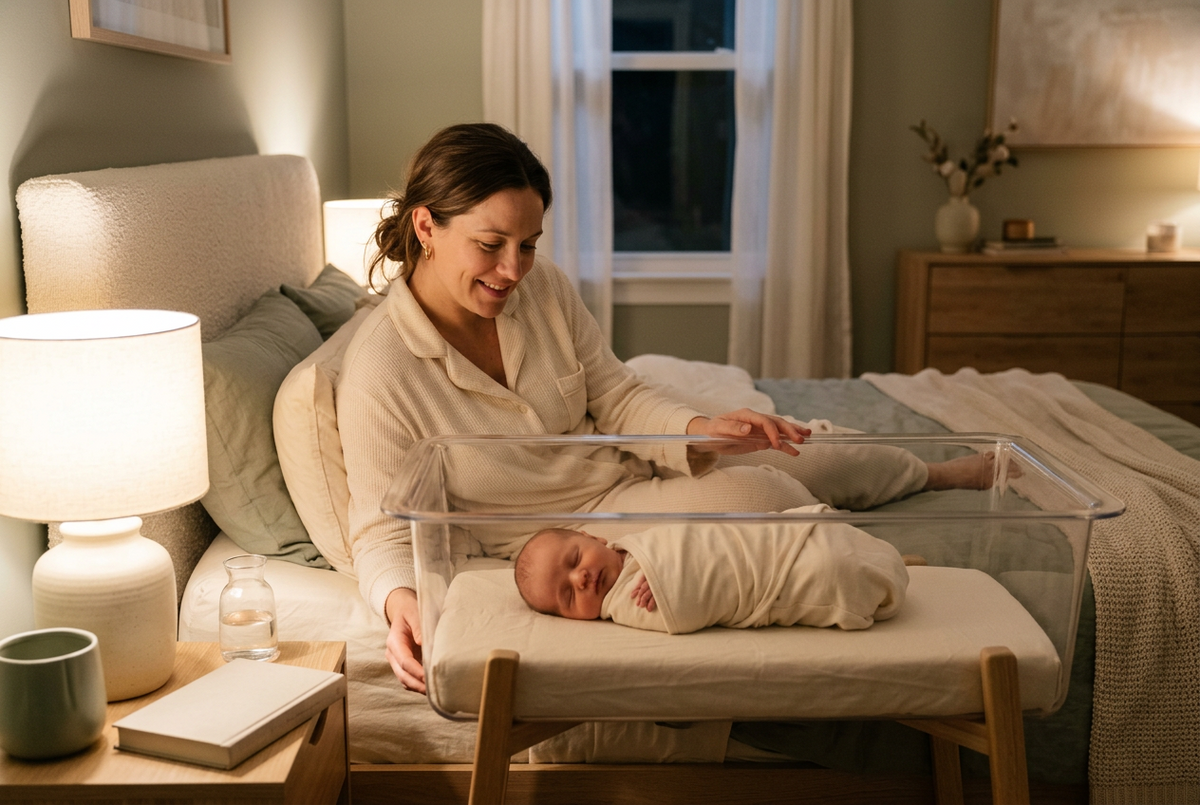
A gentler night after a big little appointment.
Evidence-informed guidance for real parenting moments
Yes. Some babies sleep more than usual after routine vaccinations, while others nap less or wake more often. Mild tiredness, fussiness, and a sore injection site may occur temporarily; many general symptoms settle within 24–48 hours. What matters is that your baby is responsive when awake, can feed appropriately, and is not showing concerning symptoms. A baby who is unusually difficult to wake, has breathing trouble, or has a fever under 12 weeks of age needs prompt medical attention. Follow any individualized feeding instructions from your pediatrician.
Maybe the pediatrician visit went smoothly, but once you get home, your baby takes a much longer nap than usual. Or the opposite happens: the evening is full of extra cuddles and short stretches of sleep. After a vaccination visit, either experience can raise questions—especially when the baby is still very young.
Sleep alone does not tell the entire story. Look at how your baby responds to you, whether they are feeding as expected, and whether there are other symptoms. This article explains common short-term changes, what you can try tonight, and when to seek help.
Why might my baby sleep more after shots?
Routine immunizations can cause short-term effects such as soreness, mild fever, irritability, or tiredness. Not every baby experiences these symptoms, and different vaccines have different side-effect profiles. The American Academy of Pediatrics (AAP) notes that some children sleep more than usual after immunization, while others have a restless night.
The timing matters too. Many common general symptoms improve within a day or two, but certain vaccines can have different reaction windows. The vaccine information provided at the visit—and your child's clinician—are the best guides for that particular appointment.

What's a normal sleep change—and what's not?
There is no single number of extra nap minutes that defines a normal vaccine reaction. Instead of measuring sleep against yesterday's schedule, compare your baby's overall behavior with their usual baseline.
| Often reasonable to monitor | Get medical advice promptly |
|---|---|
| An extra nap or a slightly earlier bedtime, while baby wakes and responds normally. | Baby is very difficult to wake, unusually weak, or not responding normally. |
| Brief fussiness or a tender injection site, with normal breathing and adequate feeding. | Breathing difficulty, persistent inconsolable crying, or signs of dehydration. |
| Mild temporary appetite changes while baby continues feeding and making wet diapers. | Fever in a baby younger than 12 weeks, or a child who looks seriously ill. |
Emergency: If your baby cannot be awakened, has trouble breathing or swallowing, or appears severely weak, call 911 in the United States. For a baby younger than 12 weeks with a temperature of 100.4°F (38°C) or higher, contact a healthcare professional immediately—even if the baby recently received shots. Do not assume a young infant's fever is harmless because it followed vaccination.
Should I wake my baby to feed after vaccinations?
A long nap is not a reason to abandon an existing feeding plan. Young infants, especially newborns and babies who need monitored weight gain, may have specific instructions about how often to feed. Continue those instructions unless your baby's clinician tells you otherwise.
- Offer breast milk or formula according to your baby's age, usual cues, and individual feeding plan.
- Pay attention to wet diapers and whether baby is feeding effectively when awake.
- If sleepiness is causing missed feeds, poor intake, or fewer wet diapers, contact your pediatrician rather than simply waiting it out.
- For babies with prematurity, weight-gain concerns, or medical conditions, follow the clinician's plan even if the baby seems sleepier than normal.
A baby who is simply sleeping an extra hour and wakes easily is very different from a baby who cannot stay awake enough to feed. If you are unsure which situation you're seeing, contact your child's healthcare team.

What if my baby sleeps less or wakes more often after shots?
Not every baby becomes sleepier. Discomfort around the injection site, mild temperature changes, and a disrupted day can make settling harder. A temporarily restless night is possible; it does not automatically mean a new long-term sleep problem.
If your baby seems uncomfortable, respond as you normally would: feed when needed, offer comfort, and keep the evening low-key. Avoid trying to enforce a rigid sleep schedule on a child who is not feeling like themselves.
Five gentle things parents can try tonight
- Keep feeding a priority. Offer milk as appropriate and watch intake and wet diapers.
- Give comfort while awake. Holding, gentle talking, and cuddling can help your baby settle.
- Care for a sore injection site. CDC suggests a cool, damp cloth for mild swelling or tenderness; follow the guidance provided at your visit.
- Use the same safe sleep setup. Put baby on their back on a firm, flat, empty sleep surface, even if they are unusually fussy.
- Ask before giving medicine. Check with your child's healthcare professional about whether a pain reliever is appropriate; do not guess doses or give medication simply to make baby sleep.

Does a baby need different sleepwear after vaccines?
Vaccinations do not call for a special sleep sack or extra layers. Choose age-appropriate sleep clothing for the actual room conditions and how your baby feels. Do not bundle a baby to “sweat out” a fever, and keep the head and face uncovered.
For infants, keep the sleep surface firm and flat, place baby on their back, and leave loose blankets, pillows, toys, and positioners out of the sleeping space. An appropriately fitted, non-weighted wearable blanket can be one option for warmth without loose bedding.
When should I call the pediatrician?
If you're worried, it's appropriate to call. In particular, seek help promptly for fever in infants younger than 12 weeks, poor feeding or signs of dehydration, symptoms that are getting worse, persistent crying, or a baby who seems unusually unwell. Trouble breathing, inability to wake, or severe weakness calls for emergency care.
If mild symptoms continue beyond the timeframe your child's healthcare team described, or your baby develops new symptoms, check back with them. Rarely, vaccine-specific reactions can occur later than the usual first day or two, so the vaccine information sheet matters.
Myth vs. fact
Myth: Every baby should sleep longer after vaccines.
Fact: Some babies sleep more; others may wake more often or have little change.
Myth: A long nap always means the baby is fine.
Fact: Responsiveness, feeding, breathing, temperature, and wet diapers matter too.
Myth: A warmer sleep sack helps a baby recover from shots.
Fact: Extra warmth does not treat vaccine reactions; dress for the room and avoid overheating.
Parent checklist: the evening after shots
- I know which vaccinations my baby received and have the clinic's after-care instructions.
- My baby wakes or responds as usual and can feed appropriately.
- I am watching for wet diapers, temperature changes, and any worsening symptoms.
- I have not changed or delayed needed feeds to protect a sleep schedule.
- The crib is flat and clear, and sleep clothing suits the room temperature.
- I know which symptoms warrant a call to the pediatrician and when to seek emergency help.
A pediatric-guidance perspective
AAP and CDC recommendations emphasize observing the child's overall condition, offering comfort, and identifying warning signs—not making assumptions based on sleep duration alone. A little extra sleep can be one short-lived response to vaccines, but a baby who cannot be awakened normally needs evaluation. This is educational guidance, not a personalized diagnosis.
What about your usual sleep sack?
If your baby already wears a properly fitted sleep sack as part of bedtime, there is usually no need to change products simply because they received vaccines. Continue to use clothing appropriate for the room and check for signs of overheating. A sleep sack is sleepwear, not treatment for fever, pain, or vaccine side effects.
For general questions about layers, see what babies can wear under a sleep sack or use the Bubble Panda TOG rating chart. If you are shopping for everyday sleepwear, you can explore our sleep sack collection.
Frequently asked questions
Is it normal for a baby to sleep more after vaccinations?
Yes. Some babies are a little sleepier after vaccinations, while others are fussier or wake more. A baby should still be responsive when awake and able to feed appropriately. Contact a clinician if anything about your baby's behavior concerns you.
How long can extra sleepiness last after baby shots?
Common mild general symptoms often improve within 24 to 48 hours, but reactions vary by vaccine. Check the information provided at your appointment and call your pediatrician if symptoms persist, worsen, or seem unusual.
Should I wake my baby for a feeding after vaccinations?
Follow the feeding schedule or medical plan recommended for your baby's age and circumstances. Do not skip needed feeds because your baby is sleeping more. Contact your pediatrician if your baby is too sleepy to feed well or has fewer wet diapers.
What if my 2-month-old has a fever after vaccines?
A temperature of 100.4°F (38°C) or higher in a baby younger than 12 weeks warrants prompt medical advice, even after vaccinations. Do not give fever medicine before obtaining guidance from your baby's healthcare professional.
Can my baby use a sleep sack after getting shots?
An appropriately fitted, non-weighted sleep sack may still be used for normal sleepwear if it suits the room temperature. It does not treat vaccine reactions. Continue back sleeping, a firm flat surface, and an empty crib.
Related reading
- What Should My Baby Wear Under a Sleep Sack?
- TOG Rating Chart
- More parent-first guides in The Slumber Lab
This article is for general educational purposes, not medical diagnosis or treatment. Follow your pediatrician’s instructions for your child.



Leave a comment
This site is protected by hCaptcha and the hCaptcha Privacy Policy and Terms of Service apply.