

THE SLUMBER LAB · SAFE SLEEP
When Baby Nods Off in the Swing
What to do next, why supervision is not enough, and how to make the next nap safer.
✦ Quick Answer
No. An ordinary infant swing or bouncer is not a safe place for a baby to sleep, even if an adult is watching. The inclined position can allow a baby’s head to slump forward or sideways and interfere with breathing. If your baby falls asleep there, move them as soon as possible to a compliant crib, bassinet, or play yard with a firm, flat mattress. Always place your baby on their back to start sleep.
The swing finally gets quiet. Your baby’s eyes close. For a parent running on little sleep, it is understandable to wonder whether a few extra minutes of peace can become a nap. But the question is not whether a swing is soothing. It is whether the equipment is designed to protect a sleeping infant’s airway.
This guide explains the difference between awake-time baby gear and a proper infant sleep surface, what to do in the moment, and how to try calmer naps without relying on a swing for sleep. It is general education, not personalized medical advice.
Why is sleeping in a swing or bouncer unsafe?
Swings and bouncers generally support a baby in a sitting or semi-reclined position. When a young infant falls asleep, their head can tip forward or sideways. Their airway may become narrowed or blocked, even when their face looks unobstructed. The American Academy of Pediatrics (AAP) lists swings, rockers, bouncers, and gliders as products that may be appropriate for awake use according to instructions, but not for infant sleep.
The AAP’s guidance on unsafe baby sleep products explains that the sleep position itself is a problem. This is why a deeply sleeping baby in a swing is not necessarily a safely sleeping baby.

But what if I stay right beside my baby?
Being present is important during awake swing use, but it does not change what the equipment is designed to do. A parent watching closely cannot turn an inclined seat into a flat, firm infant sleep surface. The safest action after your baby dozes off is to transfer them promptly.
What should I do if my baby falls asleep in a swing?
You do not need to turn the moment into a complicated routine. The next step is practical: make the safe sleep space ready, then move your baby.
- Go to an appropriate sleep space. Choose a crib, bassinet, or play yard that meets current safety requirements and suits your baby’s size and stage.
- Use a firm, flat mattress with its fitted sheet. Do not add cushions, positioners, pillows, extra mattresses, or rolled towels.
- Gently lift and move your baby as soon as possible. Support their head and neck during the transfer.
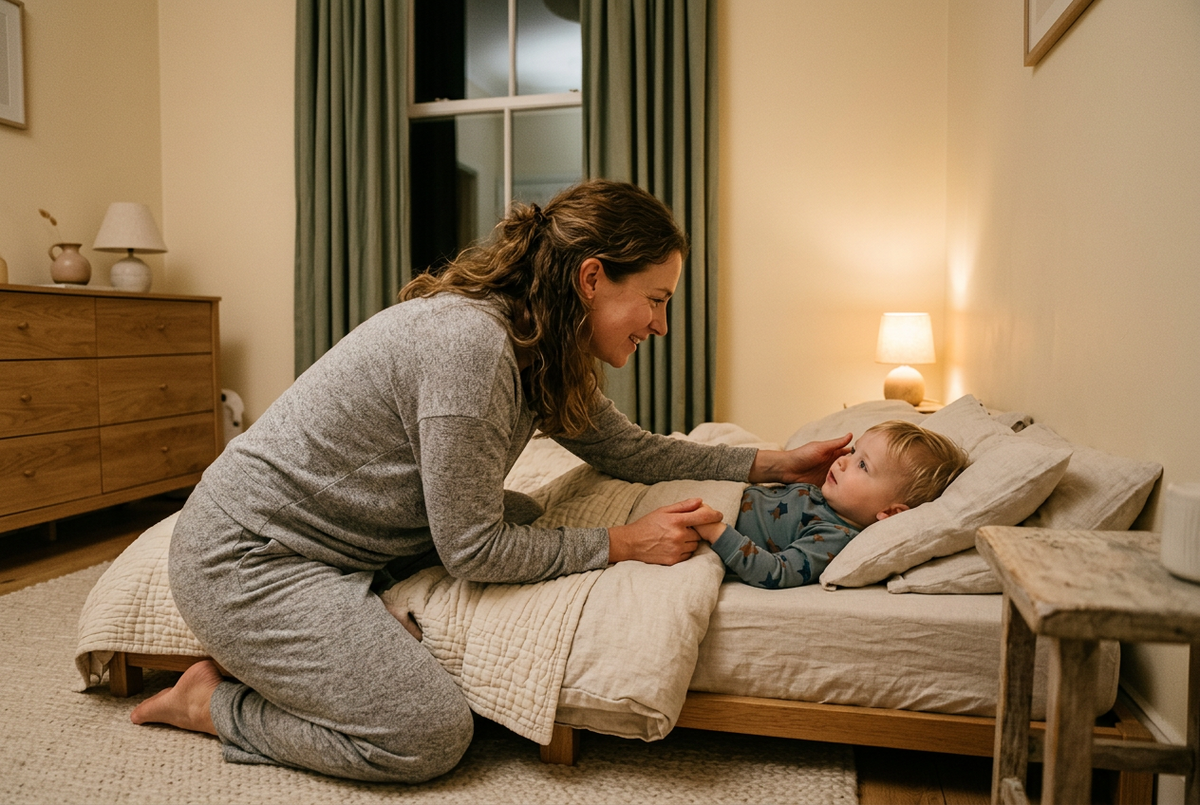
- Place your baby on their back. A separate, clear sleep surface is appropriate for daytime naps as well as overnight sleep.
- Respond if they wake. A quiet voice or simple soothing routine may help. Do not return them to the swing to continue sleeping.
These steps reflect the U.S. Consumer Product Safety Commission (CPSC) safe-sleep guidance, which specifically instructs caregivers to move babies who fall asleep elsewhere into a crib, bassinet, play yard, or suitable bedside sleeper.

Is a bouncer different from a swing when it comes to naps?
The movement is different, but the sleep-safety question is similar. A bouncer, rocker, glider, or conventional infant swing is not a substitute for a compliant infant sleep product. A more reclined seat setting does not, on its own, make it safe for naps. Nor do straps or a brand’s soothing claims make an ordinary seat an overnight sleep surface.
An item marketed for infant sleep must meet the applicable product safety requirements. For parents, the useful practical rule is to verify the intended use and federal safety standard, rather than relying on how flat a product appears in a photo. Check recalls when purchasing secondhand baby gear as well.
Why does my baby settle in the swing but resist the crib?
An infant may like gentle motion, a change of position, familiar background sounds, or simply being close to you. That preference does not mean the crib is wrong. It also does not mean you need to keep using motion until the baby is fully asleep.
Babies vary in how easily they transition to still surfaces. If yours protests, try to keep the response simple and responsive. Focus first on sleep safety and your baby’s needs rather than chasing a perfect nap schedule.
A gentler approach to crib naps
- Watch for your baby’s tired cues. Offer the crib or bassinet before your baby becomes very upset.
- Keep a short, predictable pre-nap routine. A diaper change, dimmer light, quiet cuddle, or soft song can mark the transition.
- Place baby on their back in the approved sleep space. You can stay nearby and soothe them appropriately if they fuss.
- Start small if the transition is difficult. Practice a consistent safe nap routine rather than expecting every nap to change instantly.
- Ask for help when exhaustion is mounting. Another trusted adult can take a shift so you can rest safely.
These are practical, parent-friendly ideas—not a medically validated “five-step sleep training method,” and not a substitute for individual advice about feeding, growth, or health concerns.
What if my baby has reflux and seems happier upright?
A baby who spits up may seem more comfortable being held upright while awake after feeding. But reflux does not make a swing, bouncer, wedge, or other inclined seat a safe sleep surface. For routine infant sleep, the recommendation remains back sleeping on a firm, flat surface.
If your baby regularly struggles during feeds, has poor weight gain, coughs or chokes with feeding, or seems persistently distressed, speak with your pediatrician. Do not adjust the sleep surface angle or rely on swing sleeping to manage symptoms.
Myth vs. Fact: Common questions about swing naps
| Myth | Fact |
|---|---|
| “It’s safe if I watch every minute.” | Supervision does not turn an inclined seat into a safe infant sleep surface. |
| “Just a quick swing nap is okay.” | There is no recommended safe nap duration for an ordinary infant swing. |
| “Straps or reclining all the way make it a bed.” | Use a sleep product that meets relevant safety standards; straps alone do not establish sleep safety. |
What should my baby wear after moving to the crib?
Dress your baby for the actual room conditions rather than the location they were just in. A properly fitted, non-weighted wearable blanket or sleep sack can be an alternative to loose bedding when it is appropriate for your baby’s developmental stage and the manufacturer’s sizing guidance. It does not make swing sleeping safer and is not a treatment for sleep difficulties.
If you are reviewing sleep layers, see our guide to what babies wear under sleep sacks. For families considering a wearable blanket, the Bubble Panda standard sleep sack collection offers examples to compare by fit and TOG, rather than by promises of longer sleep.

Parent Checklist: Before the next nap
A SIMPLE SAFETY CHECK
✓ The sleep space is a safety-compliant crib, bassinet, or play yard.
✓ Baby starts every sleep on their back.
✓ The mattress is firm and flat with a fitted sheet only.
✓ Pillows, toys, wedges, and loose blankets stay out.
✓ A swing or bouncer is reserved for appropriate awake use.
✓ If baby dozes off in seating equipment, I transfer them promptly.
✓ I have a plan to ask for help when I feel dangerously tired.
When should I get medical help?
If your baby is having trouble breathing, becomes limp or unresponsive, or has blue or gray lips, seek emergency medical help immediately. A baby who is repeatedly difficult to wake, is not feeding well, or shows other concerning changes should be assessed urgently according to your pediatrician’s advice. This article cannot determine whether an individual baby is breathing normally.
Frequently Asked Questions
Is it safe if I watch my baby sleep in a swing?
No. Supervision does not make a swing or bouncer a safe place for infant sleep. Move your baby to a suitable firm, flat sleep surface on their back as soon as possible.
How long can a baby safely nap in a swing?
There is no recommended safe nap duration for a conventional infant swing or bouncer. These devices are for awake use as directed, not routine naps.
What should I do if my baby falls asleep in a bouncer?
Gently move your baby as soon as possible to a safety-compliant crib, bassinet, or play yard with a firm, flat mattress and fitted sheet. Place your baby on their back.
Does a fully reclined swing become safe for overnight sleep?
No. A reclined setting, restraint straps, or a product name such as sleeper does not by itself make an infant swing safe for sleep. Use an infant sleep product that meets the applicable federal standard.
Can reflux babies sleep upright in a swing?
Do not use a swing or bouncer as a sleep treatment for reflux. Babies should generally sleep on their backs on a firm, flat surface. Ask your pediatrician about persistent reflux or feeding difficulties.
Helpful Reading & Sources
If your baby prefers being held to sleep, our Baby Only Sleeps When Held article explores that separate transition question. The important foundation is the same: a soothing routine should still end in an appropriate infant sleep space.
- American Academy of Pediatrics: Baby Products to Avoid — guidance on swings, bouncers, rockers, and other awake-time gear.
- U.S. Consumer Product Safety Commission: Safe Sleep — approved sleep spaces, moving babies from other devices, and keeping sleep areas bare.
A LITTLE BEDTIME SUPPORT 🌙
Comfort begins with a safer sleep setup.
Read more practical baby sleep guidance from The Slumber Lab.
Explore The Slumber Lab →BUBBLE PANDA · THE SLUMBER LAB · PARENT-FIRST BABY SLEEP GUIDANCE



Leave a comment
This site is protected by hCaptcha and the hCaptcha Privacy Policy and Terms of Service apply.