
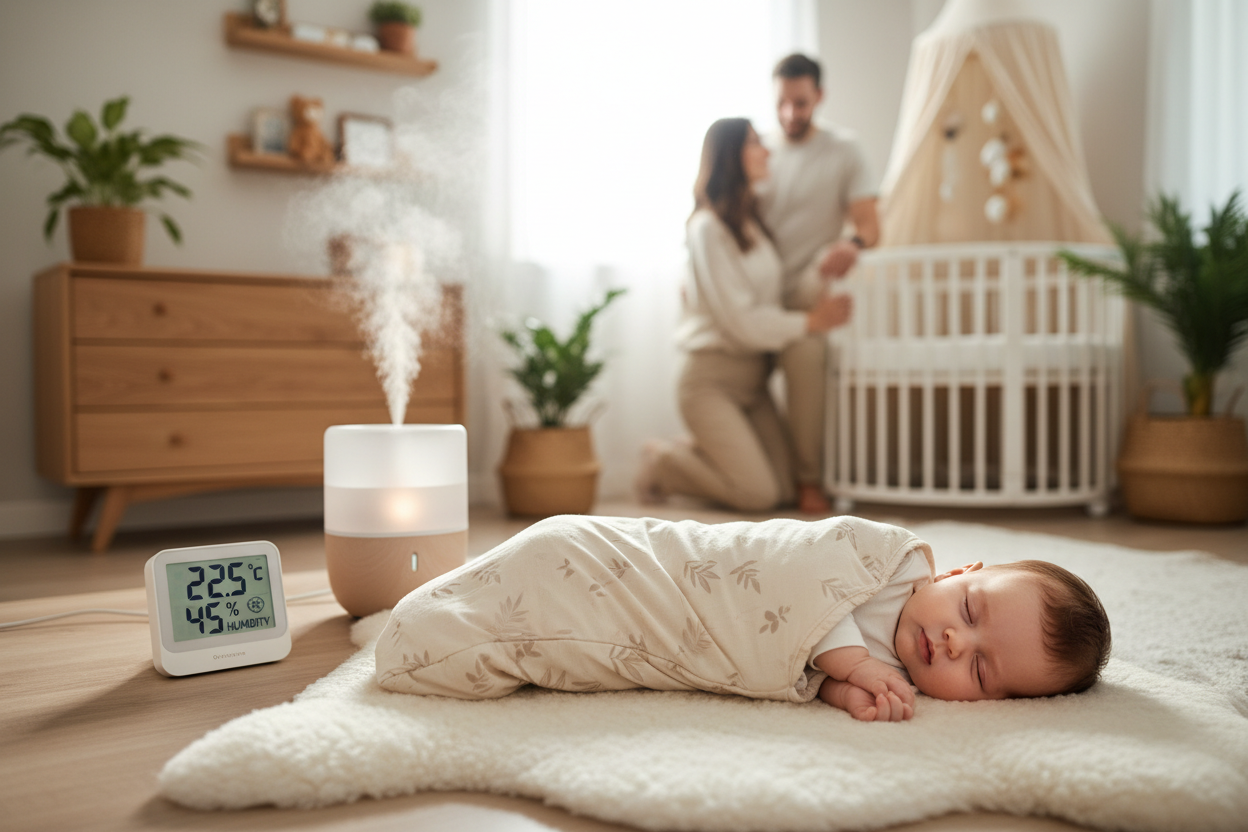
What Is the Best Humidity Level for Baby Sleep? 💧😴
You’ve adjusted the nursery temperature, chosen breathable pajamas, and picked the perfect sleep sack—but have you checked the room's humidity?
Humidity plays a bigger role in your baby's comfort than many parents realize. Air that's too dry can irritate little noses and throats, while excessive humidity may leave the nursery feeling warm and stuffy.
Finding the right balance can help create a more comfortable sleep environment, especially during the heating season or humid summer months.
The good news is that you don't need complicated equipment. A simple hygrometer and a few small adjustments can make a noticeable difference.
---Quick Answer
 ---
---
Why Humidity Matters
Humidity affects how comfortable the air feels and how easily your baby breathes during sleep.
Very dry air may contribute to dry skin, irritated nasal passages, or mild nighttime congestion. On the other hand, excessive humidity can make the room feel warmer than it actually is and may encourage mold or dust mites over time.
Maintaining a moderate humidity level helps create a healthier, more comfortable nursery throughout the year.
Quick fact: Temperature and humidity work together. Even a comfortable room temperature may feel warmer or cooler depending on the humidity level.---
Ideal Nursery Humidity
--- ---
---
Bubble Panda Expert Tip 🤍
A comfortable nursery isn't just about temperature. Pair healthy humidity levels with breathable bamboo sleepwear and the right TOG-rated sleep sack to help your baby sleep more comfortably throughout the year.
Pediatrician Perspective
Humidity doesn't directly determine whether a baby sleeps well, but it can affect overall comfort. Air that's too dry may irritate the nose, throat, and skin, while overly humid air can make the nursery feel warmer and encourage mold or dust mites.
Many pediatric experts suggest keeping indoor humidity in a moderate range and focusing on your baby's comfort rather than chasing an exact number. A digital thermometer-hygrometer can help you monitor both temperature and humidity throughout the year.
If your baby has ongoing breathing concerns, eczema, or frequent congestion, consult your pediatrician for advice tailored to your child's needs.
How to Maintain Healthy Nursery Humidity
Keeping humidity comfortable doesn't have to be complicated. These simple habits can help maintain a healthier sleep environment.
Parent Checklist
Check your nursery each day:
- ✓ Humidity stays between 40% and 60% when possible.
- ✓ Room temperature remains comfortable.
- ✓ Humidifier is cleaned according to the manufacturer's instructions.
- ✓ No visible condensation on windows or walls.
- ✓ Air feels fresh—not overly dry or damp.
- ✓ Baby sleeps comfortably without signs of overheating.

Common Humidity Mistakes
Regional Tips
Colorado: Winter heating often creates very dry indoor air. A humidifier may help keep nursery humidity in a comfortable range.
Florida: Natural humidity is often high. Good ventilation or a dehumidifier may be helpful during especially humid months.
California: Humidity levels can vary widely between coastal and inland regions, so using a hygrometer is often more reliable than guessing.
Texas: Air conditioning can lower indoor humidity during summer, while winter heating may dry the air. Check conditions regularly throughout the year.
Product Recommendation
The right humidity level is only one part of a comfortable sleep environment. Pairing healthy indoor humidity with breathable sleepwear and an appropriate TOG-rated sleep sack helps your baby stay comfortable through every season.
The Bubble Panda Bamboo Sleep Sack Collection features ultra-soft bamboo fabric that naturally promotes airflow while replacing loose blankets with a safer sleep solution.
For warmer nurseries or homes that stay comfortable year-round, many parents also choose the Bubble Panda 0.5 TOG Bamboo Sleep Sack to help reduce overheating while maintaining cozy comfort.
Not sure which TOG rating is right for your nursery? Our TOG Rating Chart makes it easy to choose the best sleep sack based on your room temperature.
Related Reading
👉 What Is the Best Baby Room Temperature at Night?
👉 Can Babies Sleep With Air Conditioning On?
👉 Can Babies Sleep With a Fan On?
Final Answer
For most babies, keeping the nursery humidity between 40% and 60% helps create a comfortable sleep environment. Combined with an appropriate room temperature, healthy humidity can support easier breathing and improve overall comfort during sleep.
Use a thermometer-hygrometer to monitor both temperature and humidity instead of guessing. If the air becomes too dry, a clean humidifier may help. If humidity becomes excessive, improving ventilation or using a dehumidifier may be appropriate.
A comfortable nursery—paired with breathable bamboo sleepwear and the correct TOG-rated sleep sack—helps support restful sleep throughout the year.
Frequently Asked Questions
What humidity should a baby's room be?
Most experts recommend maintaining indoor humidity between 40% and 60% for a comfortable nursery environment, although individual needs may vary.
Is 30% humidity too low for a nursery?
Air around 30% humidity may feel quite dry, especially during winter heating. Some babies may experience dry skin or nasal irritation. A humidifier may help if recommended by your pediatrician.
Can humidity affect my baby's sleep?
Yes. Air that is too dry or too humid can affect comfort, breathing, and skin. Maintaining moderate humidity helps create a more comfortable sleep environment.
Create the Perfect Sleep Environment 💚🌙
Healthy humidity, a comfortable room temperature, and Bubble Panda's breathable bamboo sleep sacks work together to help your baby sleep soundly through every season.
SHOP ALL SLEEP SACKS VIEW TOG GUIDE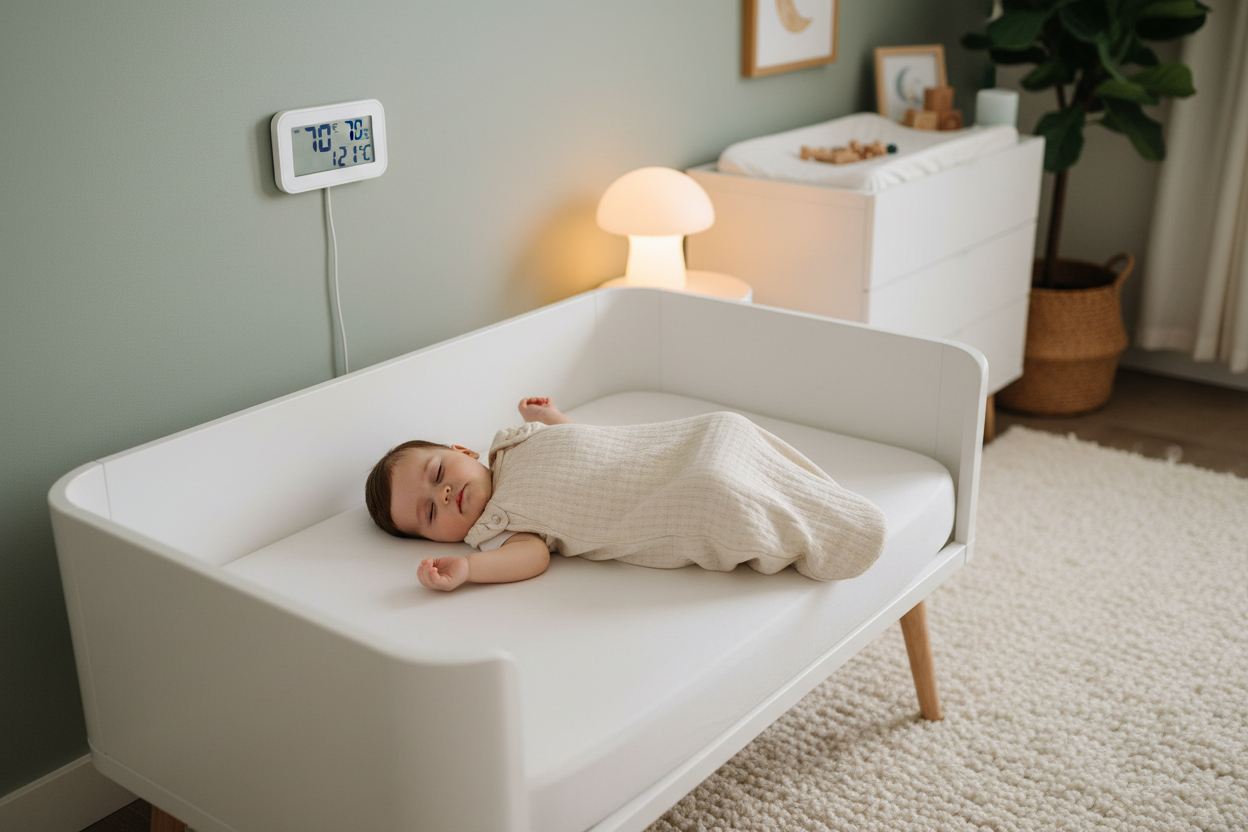


Leave a comment
This site is protected by hCaptcha and the hCaptcha Privacy Policy and Terms of Service apply.