
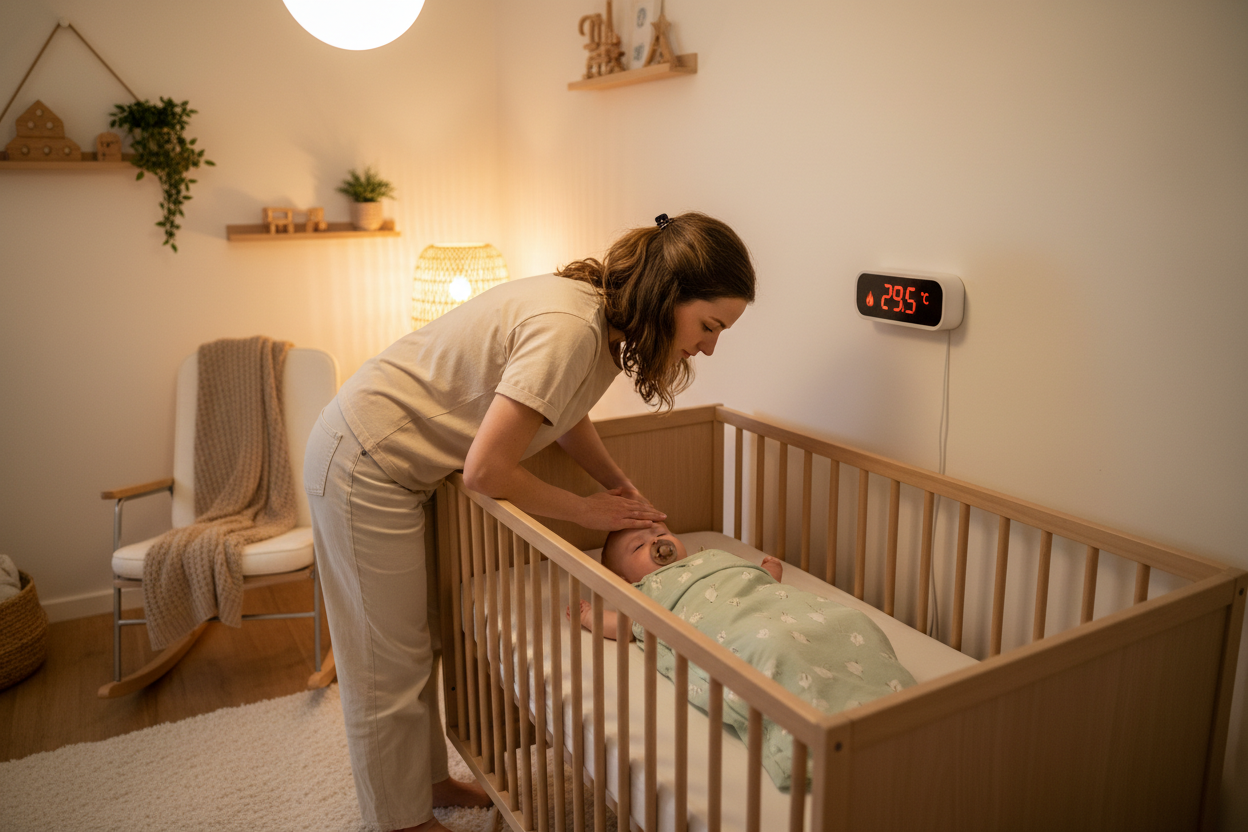
Baby Room Too Hot at Night? 9 Ways to Cool the Nursery 🌙☀️
You finally get your baby down for the night—and then the nursery starts feeling warmer and warmer.
Whether you're dealing with a summer heatwave, an upstairs bedroom, or a room that traps heat after sunset, a hot nursery can make sleep more difficult for everyone.
The good news is that there are several simple ways to improve comfort and help your baby sleep better.
Quick Answer

Why A Hot Nursery Can Affect Sleep
Many babies sleep more comfortably when the room feels cool and consistent.
When temperatures rise, some babies may become restless, wake more frequently, or struggle to settle at bedtime.
That's why managing the nursery environment can be just as important as choosing the right bedtime routine.
1. Use A Room Thermometer
Don't rely on guesswork.
A thermometer helps you understand the actual temperature inside the nursery, which may differ significantly from the rest of the house.
2. Close Curtains During The Day
Direct sunlight can dramatically increase room temperatures.
Blackout curtains or blinds help reduce heat buildup before bedtime.
3. Improve Air Circulation
Fans can help move air around the room and reduce stuffiness.
Position fans to circulate air rather than blowing directly at your baby.
4. Open Windows When Appropriate
If outdoor temperatures are cooler in the evening, opening windows may help fresh air circulate through the nursery.

5. Dress Your Baby For The Room Temperature
One of the most common mistakes parents make is overdressing.
Choose sleepwear based on the nursery temperature rather than the weather forecast.
| Room Temperature | Suggested Sleepwear |
|---|---|
| 75°F+ | Minimal lightweight layers |
| 72–75°F | Short sleeve bodysuit and lightweight sleep sack |
| 68–72°F | Light pajamas and appropriate TOG sleep sack |
6. Choose Lightweight Bedding Alternatives
Many parents use lightweight sleep sacks instead of loose blankets.
Breathable bamboo sleep sacks are especially popular during warmer months.
7. Reduce Heat-Producing Electronics
Some electronics generate additional heat.
Reducing unnecessary devices can help keep the room cooler.
8. Focus On Airflow, Not Just Temperature
A room can feel uncomfortable even when the thermometer reading seems reasonable.
Good airflow often improves overall comfort.
9. Check For Hot Spots In The Nursery
Cribs placed near windows or direct sunlight may experience warmer temperatures than the rest of the room.
Evaluate the entire sleep environment, not just the room average.
Regional Considerations
Texas families often battle extended periods of summer heat.
Florida parents frequently manage both warmth and humidity.
California heatwaves can quickly increase nursery temperatures.
New York City apartments may retain heat long after sunset.
Regardless of location, monitoring the actual room temperature is the best place to start.
Signs Your Baby May Be Too Warm
- Sweaty neck
- Damp hair
- Warm chest or back
- Restless sleep
- Frequent waking

Final Thoughts
A hot nursery doesn't automatically mean a sleepless night.
By improving airflow, reducing heat buildup, and choosing lightweight sleepwear, many parents can create a more comfortable environment for their baby.
Small adjustments often have the biggest impact on sleep quality.
👉 Related: Baby Sleep Without Air Conditioning
👉 Related: Can Baby Sleep With a Fan On?
👉 Related: Sleep Sack TOG Rating Chart
Designed for Warm Nights ✨
Explore breathable bamboo sleep sacks made for comfortable sleep in every season.
SHOP 0.5 TOG SLEEP SACKS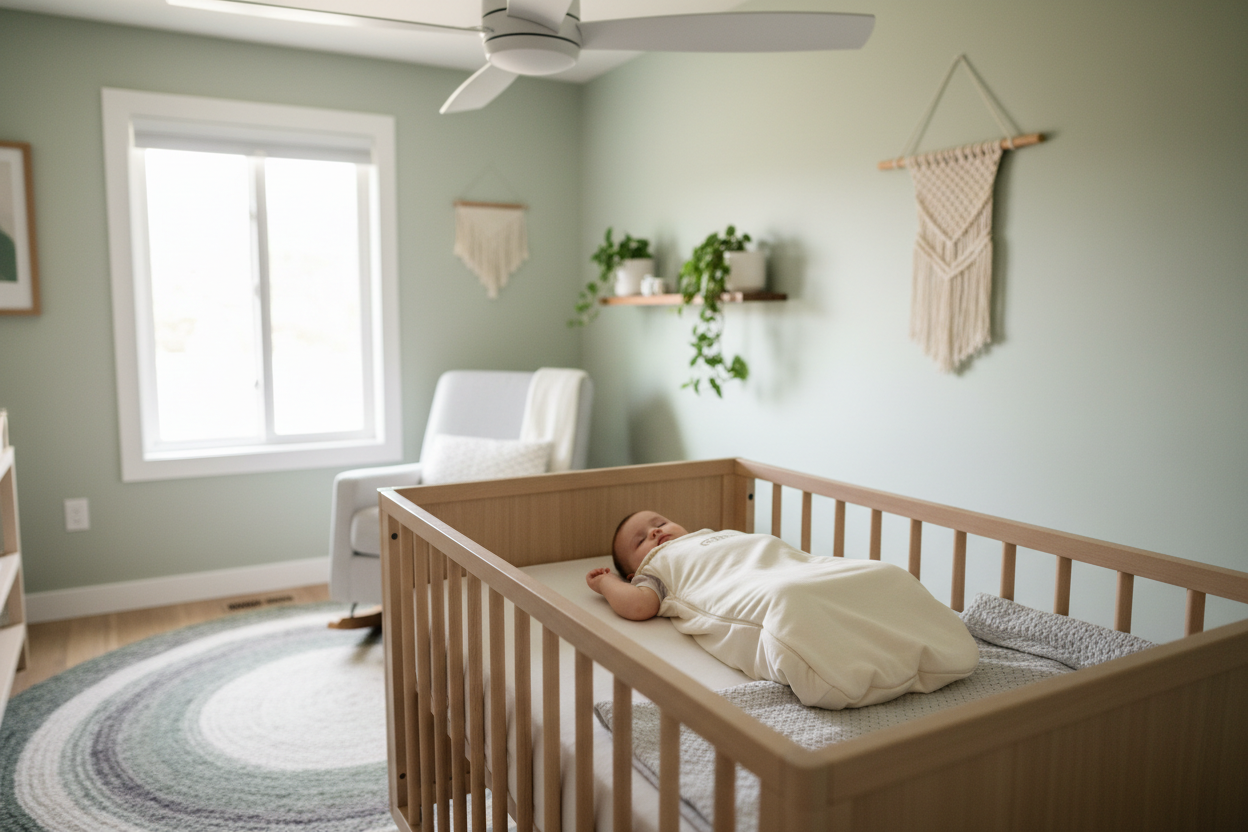


Leave a comment
This site is protected by hCaptcha and the hCaptcha Privacy Policy and Terms of Service apply.