
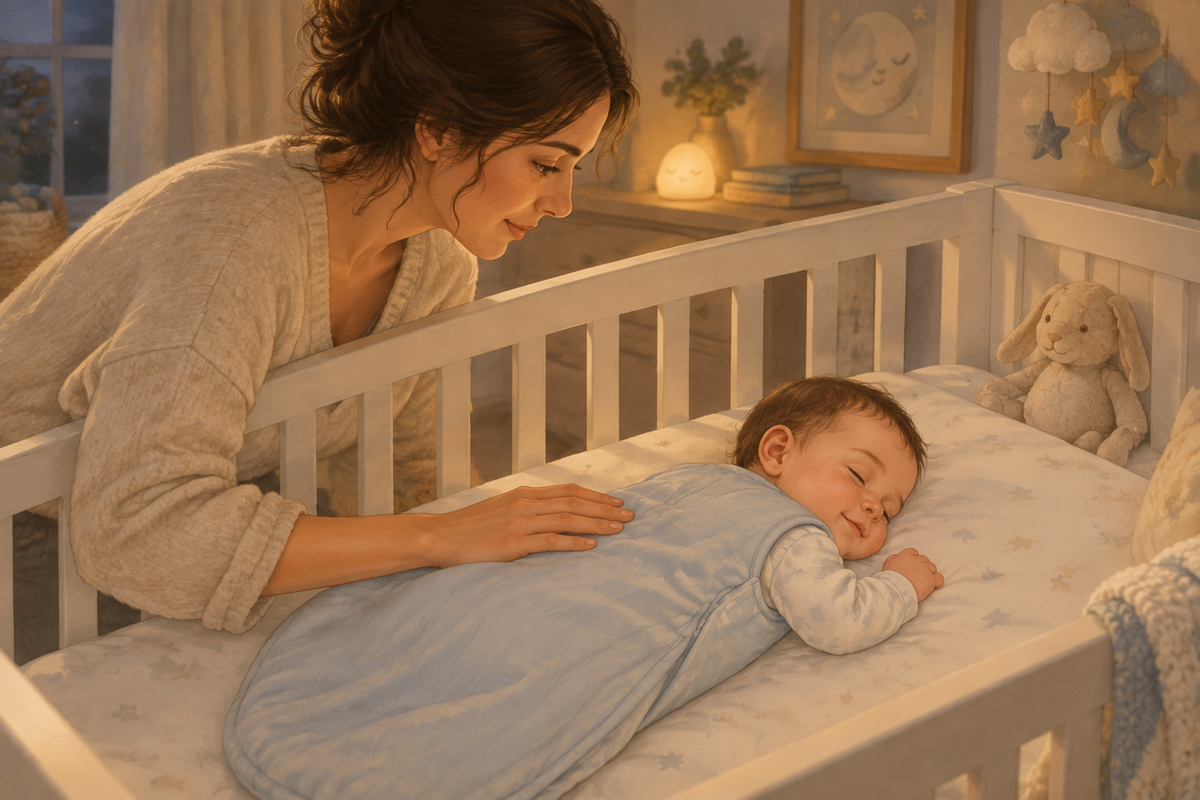
Why Does My Baby Hate the Sleep Sack? 7 Things to Try
Quick Answer
If your baby cries, squirms, or suddenly seems unhappy when you put on a sleep sack, it does not necessarily mean your baby hates sleep sacks.
Sometimes the problem is fit, temperature, fabric, timing, or simply getting used to a new feeling.
Before giving up, check the size, warmth, fabric, freedom of movement, bedtime timing, recent swaddle transition, and whether something else may be making your baby uncomfortable.
If your baby happily falls asleep in your arms, during a contact nap, or in regular pajamas but starts crying the second the sleep sack goes on, you are definitely not alone.
Sometimes bedtime suddenly turns into:
Pajamas → Sleep Sack → “NOPE!”
But before deciding that your baby simply hates sleep sacks, it helps to figure out what part of the experience your baby is actually reacting to.

Why Does My Baby Hate the Sleep Sack?
There isn't always one answer. A baby may react to the way a sleep sack feels, how warm it is, how it fits, or simply the fact that it is different from what they are used to.
1. The Fit May Not Feel Right
A sleep sack that is too loose can feel bulky. One that is too tight can feel restrictive.
The shoulder area is especially important. A properly fitting sleep sack should stay securely in place without riding up toward your baby's face.
Also look at the legs. Some babies like having plenty of room to kick and move, while others become frustrated when the lower part of a sleep sack feels very different from their usual pajamas.
Parent Question
“How do I know if the sleep sack is too small?”
Start with the manufacturer's height and weight recommendations rather than choosing based only on age.
2. Your Baby May Be Too Warm
A baby who is already warm may become noticeably unhappy when another layer goes on.
Instead of judging temperature from your baby's hands and feet, check the chest or upper back.
If your baby feels hot or sweaty, the answer is not automatically a thicker sleep sack. You may need less clothing, a lighter TOG, or a cooler sleep environment.
3. The Fabric May Feel Different
Adults don't usually think twice about fabric texture. Babies can be much more particular.
A baby who is used to soft cotton pajamas may react to a new fabric, seam, zipper, or texture.
- Does your baby cry as soon as the sleep sack touches their skin?
- Do they become upset when the zipper is closed?
- Do they calm down once the sleep sack is removed?
- Do they seem bothered around the neck, shoulders, or legs?
Those details can help you figure out whether the problem is the idea of the sleep sack or a specific physical sensation.
4. Your Baby May Want More Freedom to Move
This can become especially noticeable as babies become more mobile.
Maybe your baby used to stay relatively still. Now suddenly:
A baby who wants to move may become frustrated by clothing that feels unfamiliar around the legs or torso.
This is one reason a standard sleep sack and a swaddle should not be treated as the same product. A standard arms-free sleep sack is designed to provide warmth while allowing movement.
5. You May Be Putting It On Too Late
Imagine your baby is already overtired. They're rubbing their eyes, crying, and getting harder to settle. You quickly put on pajamas, then the sleep sack, and the crying gets even bigger.
Now it feels like the sleep sack caused everything.
But sometimes the timing is the real problem.
Try putting the sleep sack on before your baby reaches the frantic, overtired stage.
Try this bedtime sequence:
Feed → Diaper → Pajamas → Sleep Sack → Quiet Routine → Crib
6. Your Baby May Be Adjusting After Swaddling
This is one of the biggest reasons parents suddenly feel like sleep has fallen apart.
A swaddled baby is used to a very different body sensation. Then the arms come out, the arms start moving, the baby startles, touches their face, and wakes up.
Parents may think, “They hate the sleep sack,” when the bigger transition is actually swaddle to arms-free sleep.

7. Something Else May Be Bothering Your Baby
Sometimes the sleep sack is innocent.
- Hunger
- Overtiredness
- Gas
- Teething
- A wet diaper
- Being too warm or too cold
- Illness or another source of discomfort
This is why it helps to look at the whole bedtime picture instead of immediately blaming the sleep sack.
7 Things to Try Tonight
If you're tired of fighting with the sleep sack every night, don't change everything at once. Try one small adjustment at a time.
- Check the fit. Use the manufacturer's height and weight recommendations.
- Check your baby's chest or upper back. If your baby feels hot or sweaty, reduce a layer rather than automatically adding warmth.
- Check the TOG. Match the warmth of the sleep sack to the room and clothing underneath.
- Try a different fabric. A softer or lighter fabric may feel more comfortable.
- Give your baby time. A new sleep sensation may take some getting used to.
- Make it part of the routine. Put the sleep sack on during a calm part of bedtime.
- Look at the bigger transition. Rolling, swaddle changes, and new mobility can all affect sleep.
What If My Baby Cries as Soon as the Sleep Sack Goes On?
Don't assume you have to force the process.
Watch for the exact moment your baby's reaction begins. If the crying starts when the fabric touches their skin, consider texture. If it starts when the zipper closes, look at fit or pressure. If it happens after several minutes, check warmth.
If your baby was recently swaddled, consider whether the bigger issue is the change from a snug, contained feeling to having the arms free.
Bubble Panda Expert Tip
Don't ask only, “Does my baby like sleep sacks?” Ask, “What exactly does my baby dislike about this sleep sack?”
If your baby cries the moment the fabric touches their body, look at the material. If they get sweaty, look at the warmth. If they kick and fight the bag, look at the fit and freedom of movement. If they were previously swaddled, think about the transition.

Should I Just Stop Using the Sleep Sack?
Not necessarily.
If your baby dislikes one particular sleep sack, that doesn't automatically mean your baby cannot use sleepwear of this type.
First figure out what they dislike:
- The fit?
- The fabric?
- The warmth?
- The amount of movement?
- The zipper?
- The timing?
- The transition from swaddling?
These are very different problems, and each one can call for a different solution.
Pediatrician Perspective
A useful starting point is to separate sleep preference from sleep safety.
Babies may have strong preferences about clothing, but safe sleep still comes first. Sleep clothing should be appropriately sized and should not cover the baby's head. Loose blankets, pillows, and other soft objects should stay out of the baby's sleep space.
If your baby is showing signs of trying to roll, swaddling should stop. An arms-free sleep sack that allows free movement is different from a swaddle.
If your baby has persistent crying, seems unwell, has trouble breathing, has a fever, or you are concerned that something beyond normal bedtime resistance is happening, contact your pediatrician.
Common Mistakes Parents Make
Adding more layers because baby's hands feel cold
Hands and feet can feel cool even when your baby is comfortable. Check the chest or upper back instead.
Assuming a heavier sleep sack will solve night waking
More warmth isn't automatically better sleep. Choose sleep clothing based on room conditions and your baby's comfort.
Changing five things at once
New pajamas, a new sleep sack, a new bedtime, new white noise, and a new room temperature can make it impossible to know what actually helped.
Using a swaddle-style sleep sack after rolling begins
Once a baby shows signs of trying to roll, swaddling should stop. This is an important distinction between swaddle products and arms-free sleep sacks.
Parent Checklist
- ☐ Is the sleep sack the correct size?
- ☐ Does it fit comfortably around the shoulders?
- ☐ Can my baby move their legs freely?
- ☐ Is my baby sweating?
- ☐ Does the chest or upper back feel hot?
- ☐ Is the TOG appropriate for the room?
- ☐ Does my baby dislike the fabric?
- ☐ Did we recently stop swaddling?
- ☐ Has my baby started trying to roll?
- ☐ Could something else be causing the crying?
Myth vs Fact
Myth: If my baby hates the sleep sack, they shouldn't wear one.
Fact: Your baby may dislike a particular fit, fabric, warmth level, or transition rather than sleep sacks in general.
Myth: Cold hands mean my baby needs another layer.
Fact: Hands and feet can feel cool even when a baby is comfortable. Check the chest or upper back when assessing warmth.
Myth: A thicker sleep sack will help my baby sleep longer.
Fact: Sleep quality isn't simply a matter of adding warmth. Avoid overheating and choose sleep clothing appropriate for the room.
Myth: A sleep sack and a swaddle are basically the same thing.
Fact: A swaddle restricts movement, while a standard arms-free sleep sack allows the baby to move.
Regional Tips for U.S. Families
Texas & Florida
Warm nights can make a baby seem particularly resistant to a sleep sack. Before assuming your baby dislikes the garment, check whether the room and clothing combination is simply too warm.
California
Indoor temperatures can vary significantly between coastal and inland areas. Don't choose sleepwear based only on the weather outside. Look at the actual room conditions and how your baby feels at the chest or upper back.
Colder Climates
Cold weather doesn't necessarily mean your baby needs heavily layered sleepwear. Instead of adding loose blankets, use appropriate infant sleep clothing and adjust the layers underneath a properly fitting sleep sack.
What Kind of Sleep Sack Should I Try?
If your baby is comfortable with the idea of a sleep sack but doesn't like the current one, focus on fit, fabric, warmth, and freedom of movement rather than simply choosing a thicker option.
For warmer rooms, a lightweight sleep sack can make sense. Bubble Panda's bamboo 0.5 TOG sleep sacks are designed for warmer sleep environments.
You can also explore the full Bubble Panda sleep sack collection when you want to compare different options.
The important part is matching the sleep sack to your baby's size, developmental stage, room conditions, and clothing underneath.
Related Reading
A Better Sleep Sack Starts With the Right Fit
Find a sleep sack that matches your baby's size, sleep environment, and stage.
Explore Sleep SacksThis article is for general educational purposes and is not a substitute for medical advice from your child's healthcare provider.


Laisser un commentaire
Ce site est protégé par hCaptcha, et la Politique de confidentialité et les Conditions de service de hCaptcha s’appliquent.