
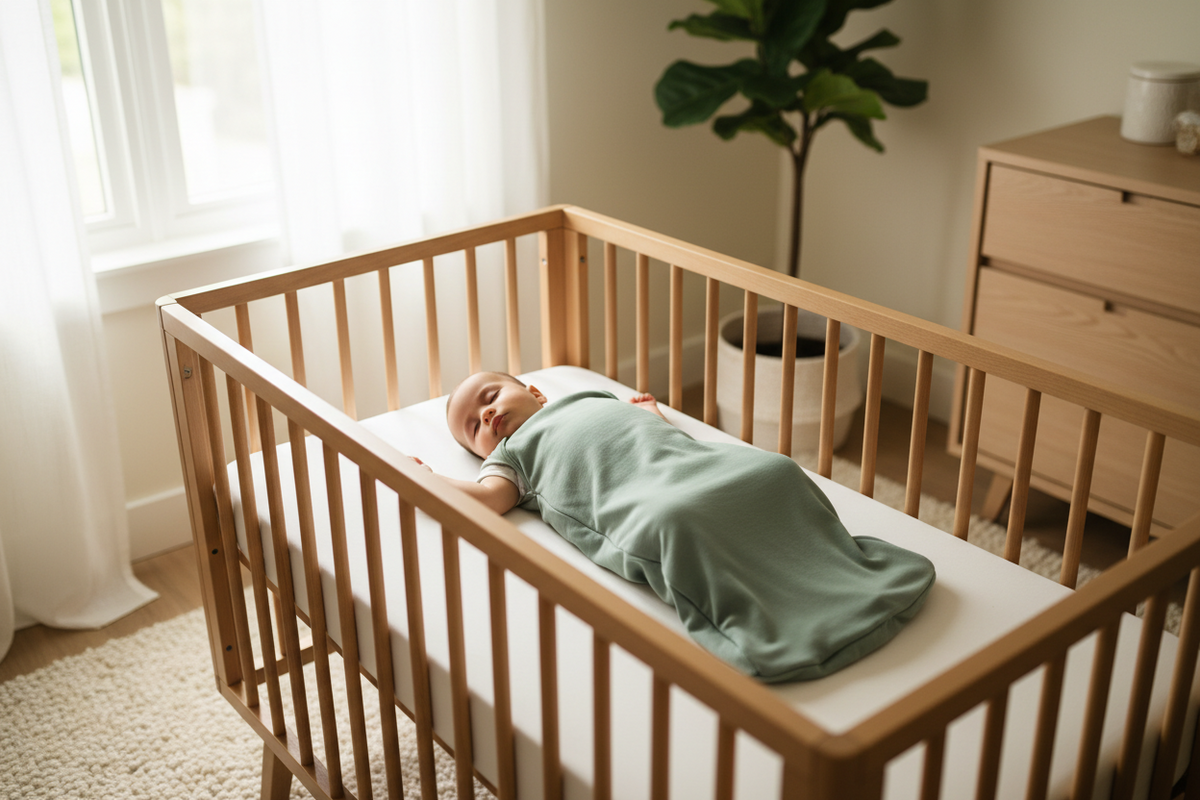

IMAGE ALT: Baby sleeping in a bamboo sleep sack during a daytime nap in a clear crib.
Should Baby Wear a Sleep Sack for Naps?
If your baby already wears a sleep sack at night, you may wonder whether you should use the same sleepwear during daytime naps. The short answer is: for many babies, a properly fitted sleep sack can also be part of a consistent nap routine.
Quick Answer
Yes. A properly fitted, non-weighted sleep sack can be used for daytime naps as well as nighttime sleep. The most important things to check are fit, room temperature, TOG rating, clothing layers, and your baby's developmental stage. If your baby sleeps comfortably in a sleep sack at night, using the same familiar sleepwear for naps can also make the daytime routine more consistent.
Why Parents Often Ask About Nap-Time Sleep Sacks
Nighttime sleep gets most of the attention when parents think about sleepwear. But daytime naps can create a completely different situation.
Your baby's room may be warmer during the afternoon. The nursery may have more sunlight. You may also use air conditioning differently during the day than at night.
That means the question is not simply:
A better question is:

IMAGE ALT: Parent checking a baby's sleep sack and clothing layers before a daytime nap.
Why a Sleep Sack Can Work for Daytime Naps
One of the biggest benefits of using the same type of sleepwear for naps and nighttime sleep is consistency.
Babies often respond well to familiar sleep cues. If putting on a sleep sack is already part of your bedtime routine, using it before a nap can create another predictable signal that sleep time is approaching.
- It can become a familiar part of the nap routine.
- It stays with the baby rather than becoming loose bedding.
- It can be selected according to room temperature and clothing layers.
- Parents can use the same basic sleepwear system throughout the day.
The goal is not to make every nap look exactly like nighttime. The goal is to create a comfortable, appropriately dressed sleep environment.
1. Start With the Nap Room Temperature
Daytime room temperature can be very different from nighttime temperature, especially during summer.
Before choosing the sleep sack, check the actual room temperature rather than simply choosing a TOG based on the season.
These are starting points rather than universal rules. Always follow the sleep sack manufacturer's TOG guidance and consider your baby's actual environment and clothing layers.

IMAGE ALT: Lightweight bamboo sleep sack used for a baby's warm daytime nap.
2. Choose TOG Based on the Nap Environment
TOG is one of the easiest ways to organize baby sleepwear because it describes the warmth level of the sleep sack.
Bubble Panda's current sleepwear range includes lightweight 0.5 TOG options for warmer environments, 1.0 TOG options for more moderate conditions, and warmer options for cooler environments.
A simple way to think about it
Warm nap room → lighter sleep sack and lighter base layer
Moderate nap room → medium-weight sleepwear and flexible layering
Cool nap room → warmer sleepwear setup based on the manufacturer's guidance
For a more detailed temperature and TOG breakdown, see the Baby Sleep Sack TOG Guide .
3. Think About What Your Baby Wears Underneath
A sleep sack is only one part of the sleepwear system.
A lightweight 0.5 TOG sleep sack in a warm room may be paired with a lightweight bodysuit, while a cooler environment may call for more coverage underneath.
Avoid choosing the sleep sack first and then automatically adding the same clothing underneath every day. The room temperature can change significantly between a morning nap and an afternoon nap.
If your baby's nap room gets warmer in the afternoon, check the room temperature again instead of automatically using the same layers you used for the morning nap.
4. Match the Sleep Sack to Your Baby's Developmental Stage
The right sleep sack can change as your baby becomes more mobile.
| Development Stage | What to Consider |
|---|---|
| Young baby | Focus on correct fit, room temperature, and appropriate sleepwear. |
| Rolling baby | Use an appropriately fitted sleep sack that allows free movement and follow safe sleep guidance. |
| Crawling baby | Consider whether the design gives enough freedom for movement during transitions around nap time. |
| Standing or walking toddler | A walker sleep sack with separated legs can provide greater freedom of movement than a traditional enclosed-leg design. |
For toddlers who are already standing, cruising, or walking, see our Walker Sleep Sack Collection .
5. Keep the Nap Sleep Environment Simple
A sleep sack does not replace the basics of safe sleep.
For babies, the sleep surface should remain firm and flat, and the sleep space should be free of loose bedding and other soft objects. The sleep sack should fit appropriately and should never cover the baby's head or face.
Weighted sleep sacks and weighted wearable blankets should also be avoided.
Nap-Time Safety Check
Common Nap-Time Sleep Sack Mistakes
Your baby's room may be warmer during the day, especially during summer.
Indoor temperature matters more than whether the calendar says summer or winter.
A sleep sack that worked well for a stationary baby may not be the most practical option once a toddler starts standing and walking.
Hands and feet can feel cool even when a baby is comfortable. Consider the baby's overall comfort and the room environment instead.
Nap-Time Sleep Sacks in Different U.S. Climates
Families in Florida may have a very different daytime nap environment from families in colder parts of the country. Air conditioning can also make an indoor nursery considerably cooler than the outdoor temperature. That is why the actual nap-room temperature is more useful than simply looking at the weather outside. A lightweight bamboo sleep sack can be particularly practical when the room is warm and parents want to avoid unnecessary layers.

IMAGE ALT: Baby wearing a lightweight bamboo sleep sack in a warm nursery during nap time.
Pediatrician Perspective
The key safety issue is not whether the sleep happens during the day or at night. Safe sleep principles still apply during naps. Parents should focus on a clear sleep space, an appropriate sleep surface, correct sleepwear fit, and avoiding overheating.
If your baby has a medical condition, was born prematurely, or you have specific questions about temperature regulation or sleepwear, follow your pediatrician's individualized guidance.
Choosing a Bubble Panda Sleep Sack for Naps
If your baby already sleeps comfortably in a Bubble Panda sleep sack at night, you can use the same general sleepwear system for naps while adjusting the TOG and clothing layers to match the daytime environment.
For warm nap rooms, the Bubble Panda Bamboo 0.5 TOG Sleep Sack Collection is designed as a lightweight option for warmer environments.
For babies who are still using a traditional enclosed-leg sleep sack, the Standard Sleep Sack Collection offers options for everyday sleep routines.
As your child becomes more mobile, a Walker Sleep Sack may make more sense for a toddler who is standing or walking.
So, Should Your Baby Wear a Sleep Sack for Naps?
For many babies, yes. If your baby is comfortable wearing a properly fitted sleep sack at night, there is no need to automatically stop using one for daytime naps.
Just remember that nap conditions can be different from nighttime conditions.
Use a sleep sack for naps when:
- The sleep sack fits your baby correctly.
- The TOG matches the room environment.
- The clothing layers underneath are appropriate.
- The design matches your baby's developmental stage.
- The sleep environment follows safe sleep practices.
Related Reading
Frequently Asked Questions
Can my baby wear a sleep sack for daytime naps?
Yes. A properly fitted, non-weighted sleep sack can be used during daytime naps. Choose the TOG and clothing layers based on the nap-room temperature and your baby's developmental stage.
Should I use the same sleep sack for naps and nighttime?
You can use the same type of sleep sack for both, but the clothing layers or TOG may need to change if the daytime room is warmer or cooler than the nursery at night.
What TOG sleep sack is best for warm daytime naps?
A lightweight 0.5 TOG sleep sack is commonly used for warmer rooms. The right choice still depends on the actual room temperature, clothing underneath, and the manufacturer's TOG guidance.
Make Nap-Time Sleepwear Simple 🌿
Start with your baby's room temperature, choose an appropriate TOG, check the fit, and adjust the layers as your baby's needs change.
Find the Right Baby Sleep Sack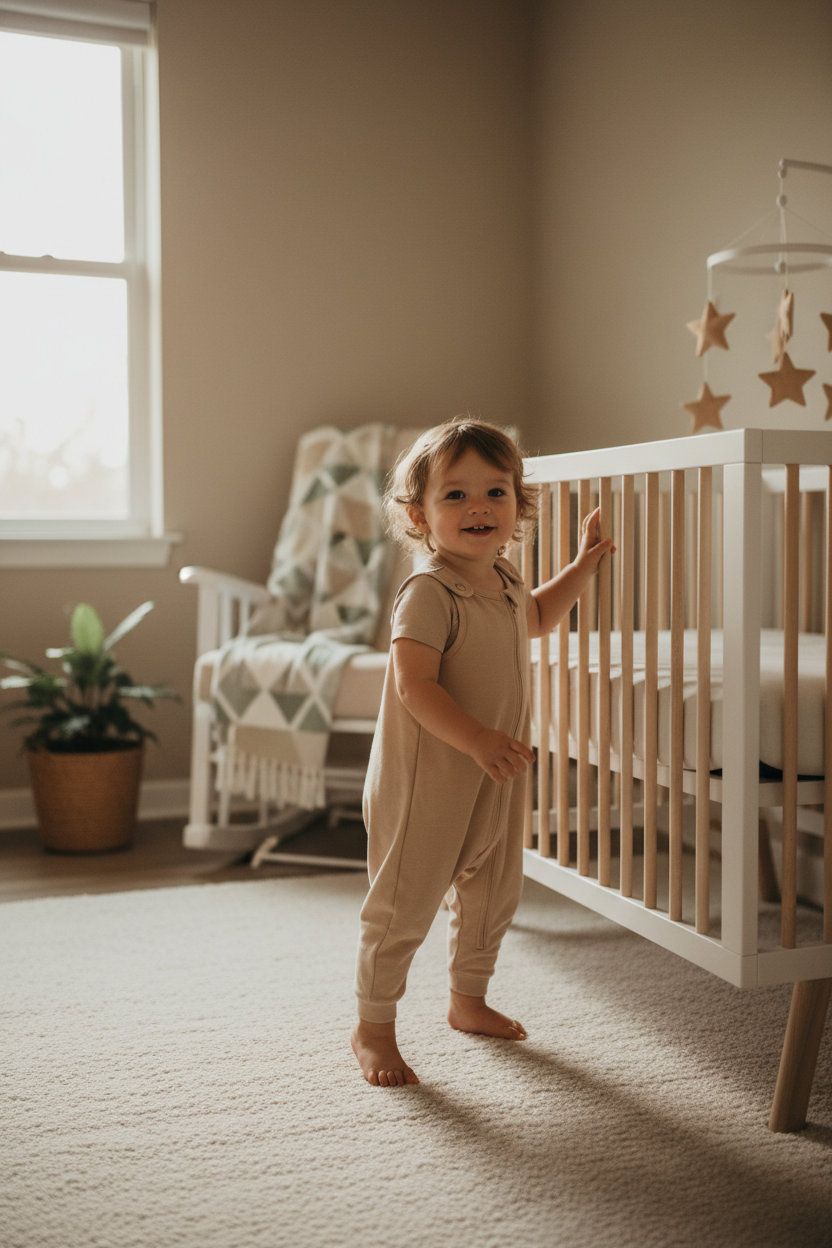


Laisser un commentaire
Ce site est protégé par hCaptcha, et la Politique de confidentialité et les Conditions de service de hCaptcha s’appliquent.