
When Should You Switch to a Walker Sleep Sack?
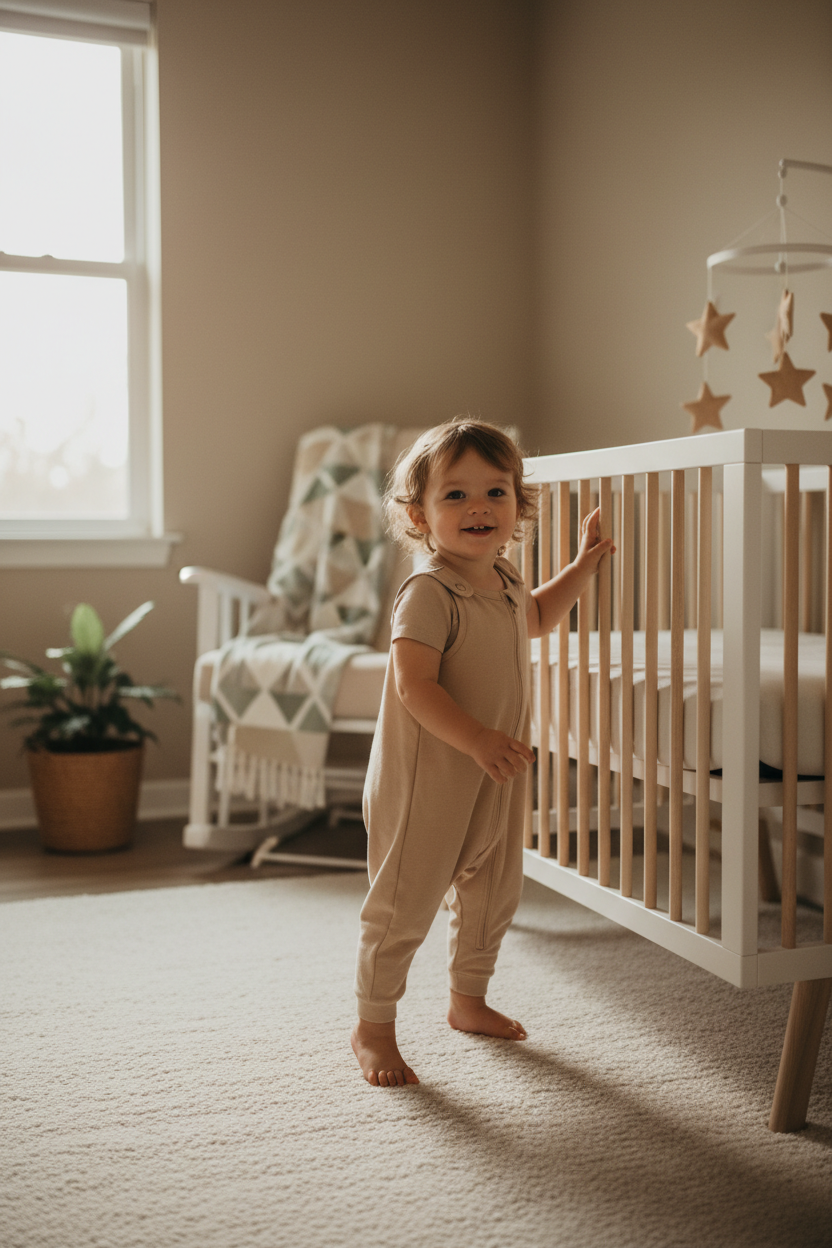
Your baby is pulling up, cruising around the furniture, and suddenly trying to walk everywhere. If you're wondering whether it's time to move from a traditional sleep sack to a walker style, here's what to look for.

💡 Quick Answer
You can consider switching to a walker sleep sack when your baby is becoming more mobile, especially during the stages of pulling to stand, cruising, or beginning to walk.
Unlike a traditional sleep sack that keeps both legs together, a walker-style design typically separates the legs and may include open feet, giving a more mobile baby or toddler greater freedom of lower-body movement.
There isn't one exact age when every baby needs to switch. Your baby's developmental stage, mobility, and comfort in their current sleepwear are usually more useful clues than age alone.
👣 Why Would a Baby Need a Walker Sleep Sack?
A walker sleep sack isn't simply a larger version of a traditional sleep sack. The biggest difference is how the lower part of the sleepwear is designed.
A traditional sleep sack generally keeps both legs together inside one shared section. A walker-style sleep sack separates the legs, and some designs also include open feet.
That difference can become more noticeable when your baby starts moving through stages such as:
- Pulling to stand
- Standing while holding furniture
- Cruising along furniture
- Taking first steps
- Walking around before bedtime or after waking
A walker sleep sack is an option for a more mobile stage. It isn't something every baby must switch to at a specific age.
1️⃣ Your Baby Is Starting to Pull Up and Stand
One of the first signs that your baby's mobility is changing is pulling up to stand.
Maybe they're grabbing the crib rail. Maybe they're standing at the couch. Maybe they now seem determined to stand every time you put them down.
Your baby doesn't necessarily need a walker sleep sack yet, but this can be a good time to start evaluating whether their current sleepwear still works comfortably with their new movement.
2️⃣ Your Baby Is Cruising Around Furniture
Cruising is when babies move sideways while holding onto furniture or another stable surface.
This is often when parents start noticing how much more their child wants to move their legs independently.
A separated-leg sleep sack can provide a different movement experience from a traditional legs-together design.

3️⃣ Your Baby Is Taking Their First Steps
Once your baby starts taking independent steps, they're no longer simply sleeping in their sleepwear.
They may stand after waking, walk around before bedtime, or move toward you in the morning while still wearing their sleep sack.
That's why parents often begin searching for terms such as “sleep sack with feet” or “sleep sack for walking baby.”
4️⃣ Your Baby Doesn't Like Having Both Legs Together
Sometimes the issue isn't that your child can't move in a traditional sleep sack. They simply may not like the feeling anymore.
You may notice them pulling at the bottom, trying to separate their legs, or becoming frustrated when they want to stand and move around.
If your child is otherwise sleeping comfortably but increasingly wants independent leg movement, the design of the sleep sack may be worth reconsidering.
5️⃣ Your Baby's Mobility Has Changed More Than Their Age Suggests
Two babies who are the same age can be at very different stages of mobility.
One may still be crawling while another may already be cruising or walking.
That's why developmental stage can be more useful than simply asking whether your baby is old enough for a walker sleep sack.
🔎 Standard vs. Walker Sleep Sack
Neither style is automatically better. The more useful question is which design matches your child's current stage and movement.
| Feature | Standard Sleep Sack | Walker Sleep Sack |
|---|---|---|
| Leg design | Both legs together | Legs separated |
| Foot design | Usually enclosed | May have open feet |
| Movement | Traditional wearable sleepwear | Greater lower-body freedom |
| Typical stage | Babies comfortable with a traditional design | Babies and toddlers becoming more mobile |
| Main consideration | Fit and comfort | Fit, comfort, and mobility |

🌿 What Should You Consider Before Switching?
Is your baby crawling, standing, cruising, or beginning to walk?
Does your baby seem comfortable in their current sleep sack, or are they increasingly frustrated by the legs-together design?
Make sure the sleep sack is the correct size and follows the manufacturer's fit guidance.
Choose the TOG based on the sleep environment and clothing underneath, not simply because your baby is learning to walk.
Consider whether separated legs and open feet would better match how your child currently moves.
🌡️ What TOG Should You Choose?
A walker sleep sack answers one question: “How does my baby move?”
TOG answers another: “How warm is the sleepwear?”
These should be treated as two separate decisions. A baby who is learning to walk doesn't automatically need a particular TOG rating.
A lightweight option such as a 0.5 TOG sleep sack may be appropriate depending on room temperature, clothing layers, and the overall sleep environment.

🌎 Your Sleep Environment Can Look Very Different Across the U.S.
A baby becoming mobile in Texas may also be sleeping in a warm room during much of the year, while a family in Florida may be balancing warm, humid weather with strong indoor air conditioning.
A family in California may experience significant temperature differences depending on the region, while a toddler in New York City may need very different sleepwear layers during colder months.
Consider the actual room environment, TOG rating, clothing layers, fit, and your child's developmental stage together.
🐼 Bubble Panda Expert Tip
Don't switch sleep sacks just because your baby reached a certain age.
Instead, look at the combination of mobility + comfort + fit + sleep environment. If your child is becoming more mobile and you want more independent leg movement, that's a much more useful reason to explore a walker-style design.
🩺 Pediatrician Perspective
There is no universal age at which every baby needs to switch to a walker sleep sack. The American Academy of Pediatrics recommends appropriately sized wearable blankets or sleep sacks as an alternative to loose blankets and emphasizes that sleepwear should allow babies to move freely.
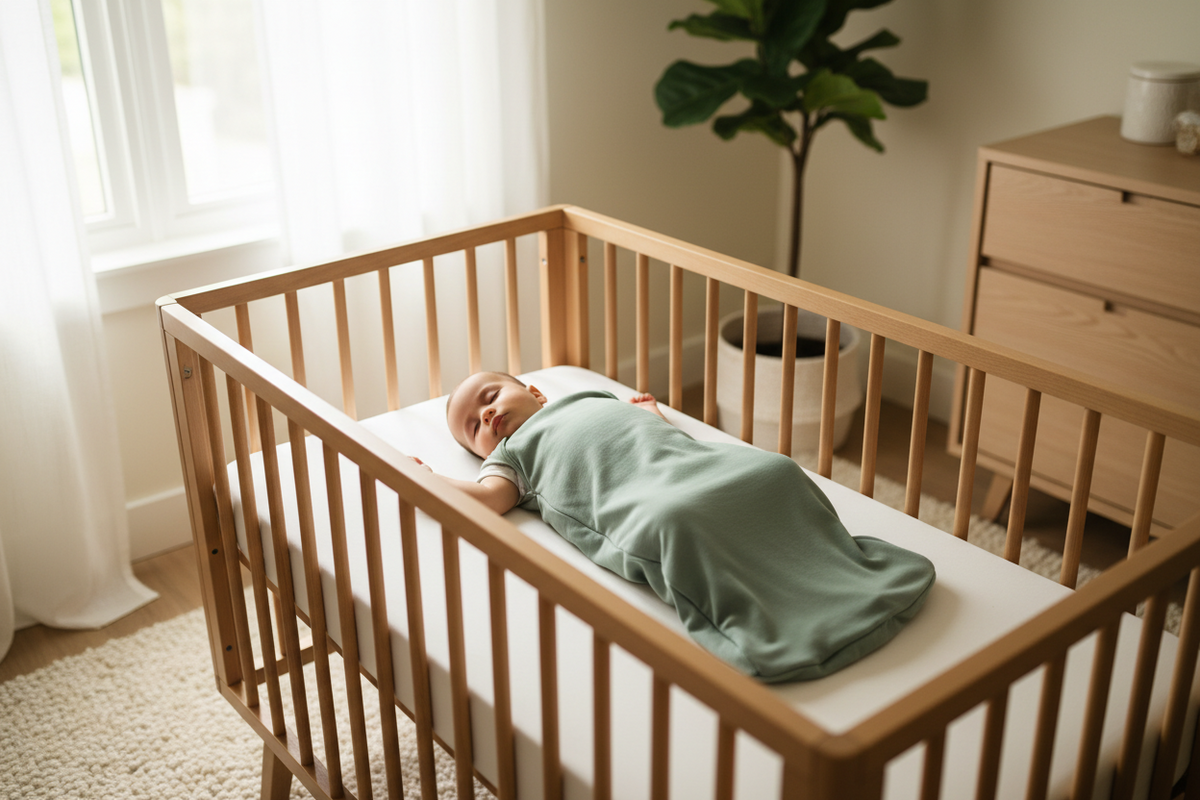
For infants, continue following current safe-sleep guidance, including placing babies on their backs on a firm, flat sleep surface and keeping loose bedding and soft objects out of the sleep space.
✅ Parent Checklist
- My baby is becoming more mobile.
- My baby is pulling up, standing, cruising, or walking.
- I have checked that the current sleep sack fits properly.
- I have considered whether separated legs would be useful.
- I am choosing TOG based on the sleep environment rather than age alone.
- I am following current safe-sleep guidance.
❌ Myth vs. Fact
Every baby should switch to a walker sleep sack when they turn one.
Age alone doesn't determine whether a walker sleep sack is appropriate. Mobility, developmental stage, fit, comfort, and the product's intended age and size range all matter.
📝 The Simple Decision
If your baby is still comfortable in a traditional sleep sack and isn't particularly mobile, there may be no reason to change.
If your baby is moving through:
then a walker-style sleep sack may be worth considering because the separated-leg design is built around greater lower-body mobility.
Choosing a Sleep Sack for a More Mobile Baby
If your baby is moving from crawling to standing, cruising, or early walking, a walker-style sleep sack can be one option to consider. Bubble Panda's Bamboo Walker Sleep Sack features separated legs and open feet for greater freedom of lower-body movement.
The goal isn't simply to find a bigger sleep sack. It's to find a design that makes sense for your child's current stage, while still considering fit, TOG, and the sleep environment.
SHOP WALKER SLEEP SACKS →Frequently Asked Questions
Does my baby have to be walking before using a walker sleep sack?
No. A walker sleep sack does not necessarily mean your child must already be independently walking. Parents may consider this style during the transition into greater mobility, including standing, cruising, and early walking. Always follow the product's recommended sizing and fit guidance.
Should I switch to a walker sleep sack when my baby turns one?
Not necessarily. Age alone isn't a reason to switch. Your baby's developmental stage, mobility, and comfort in their current sleepwear are more useful factors to consider.
Is a walker sleep sack safer than a traditional sleep sack?
Neither design should automatically be described as safer. They are different sleepwear designs intended for different movement needs. For infants, use appropriately sized sleepwear and follow current safe-sleep recommendations.
📚 Related Reading
Ready for More Freedom of Movement?
Explore bamboo sleep sacks designed around different stages, sleep environments, and everyday baby sleep needs.
EXPLORE BAMBOO WALKER SLEEP SACKS →


Laisser un commentaire
Ce site est protégé par hCaptcha, et la Politique de confidentialité et les Conditions de service de hCaptcha s’appliquent.