

BABY SLEEP • SLEEP SACK FIT • PARENT GUIDE
Can a Sleep Sack Be Too Tight? How to Check the Fit
Your baby's sleep sack is supposed to feel cozy—not restrictive. But how can you tell if it's actually too tight?
Quick Answer 💚
Yes, a sleep sack can be too tight. The most important areas to check are the neckline, chest, arm openings, and overall length. A properly fitted sleep sack should follow the manufacturer's sizing guidance, stay appropriately positioned around your baby's shoulders and neck, and allow comfortable movement. If your baby has clearly outgrown the current size or the garment feels restrictive, it's time to check the next size.
You bought the right size—or at least you thought you did.
Then you zip your baby into the sleep sack and notice something: the fabric looks stretched across the chest.
Maybe the neckline looks snug. Maybe your baby has started growing out of the arm openings. Or maybe you're wondering whether a sleep sack is supposed to fit this closely in the first place.
These are completely reasonable questions.
The goal isn't to make a sleep sack as loose as possible. It's to find the right balance between secure fit, comfortable movement, and the manufacturer's sizing guidance.
1. Start With the Neckline
The neckline is one of the first places parents should check.
A sleep sack should fit appropriately around the neck and shoulders rather than hanging loosely around the baby's face.
At the same time, the neckline should not appear uncomfortably tight or dig into the skin.

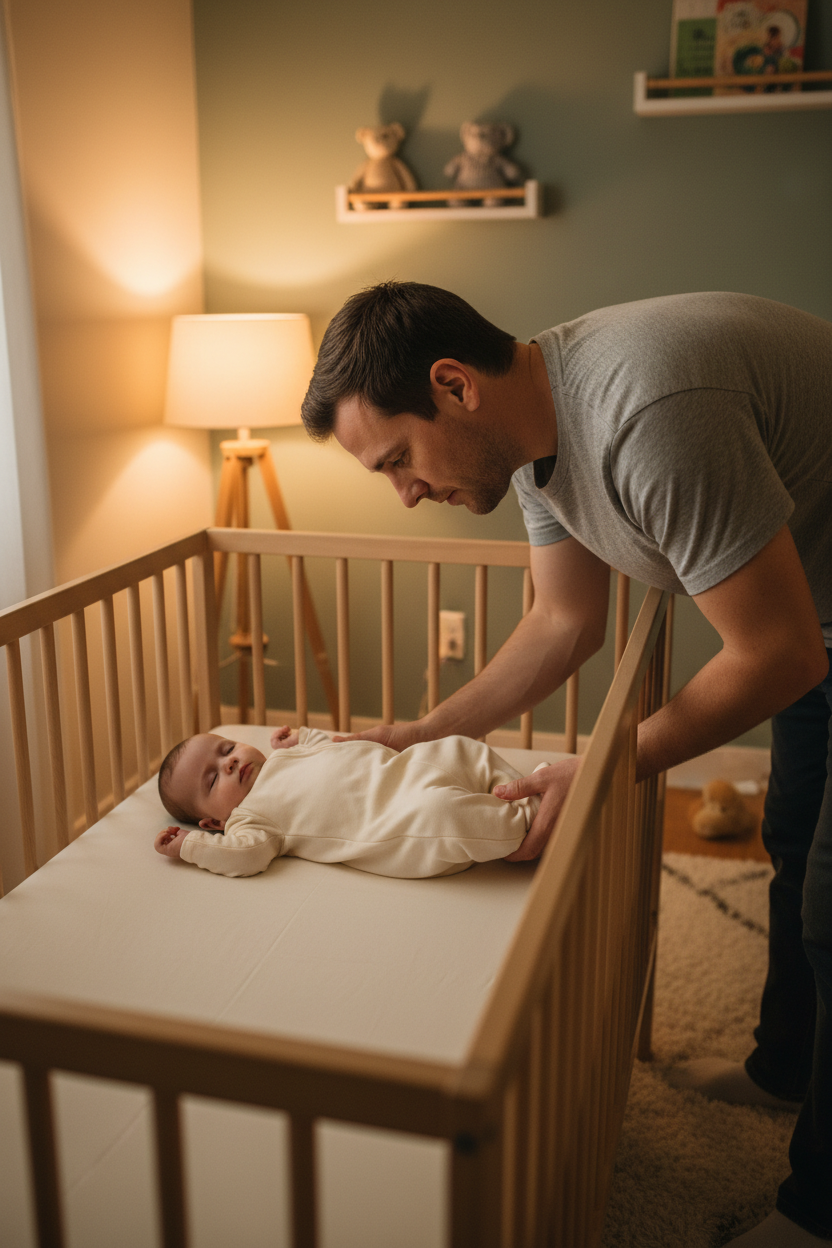
Image Prompt: Realistic American parent gently checking the neckline and shoulder fit of a baby's sleep sack before bedtime. Baby is calm and comfortable in a modern neutral nursery. The parent is carefully looking at the neckline without pulling the fabric aggressively. Show a properly fitted sleep sack with a secure but comfortable neckline. Warm cream, oatmeal and subtle sage green colors, natural evening light, authentic U.S. parenting lifestyle photography, realistic fabric texture, trustworthy editorial baby sleep photography. No text, no logos, no watermark.
2. Look at the Chest and Arm Openings
Next, look at how the sleep sack sits across your baby's chest and around the arms.
If the fabric is visibly stretched, your baby has very little room to move comfortably, or the arm openings are leaving noticeable pressure marks, the current size may no longer be the right fit.
Babies can outgrow sleepwear surprisingly quickly, especially during growth spurts.
A sleep sack that fit perfectly a few weeks ago may suddenly feel much smaller.
3. Does Your Baby Still Have Comfortable Leg Movement?
Babies need room to move their legs naturally.
A sleep sack shouldn't make your baby feel as though their legs are trapped in a narrow tube.
Look at how your baby moves while lying down, rolling, kicking, or changing positions.
The exact amount of room depends on the design of the sleep sack, so don't compare one brand's shape directly with another.
Instead, follow the specific manufacturer's fit instructions and make sure the sleep sack is appropriate for your baby's current size and developmental stage.
4. Check the Length
A baby can outgrow a sleep sack from the bottom as well as the top.
If the sleep sack is noticeably shorter than it used to be, your baby may have entered a new size range.
Don't try to extend the useful life of a sleep sack simply because your baby can still technically zip into it.
A better approach is to check your baby's current measurements against the manufacturer's size chart.

Image Prompt: Realistic American baby around 6–12 months comfortably moving and kicking while wearing a properly fitted bamboo sleep sack in a calm nursery. Baby is lying safely on a firm crib mattress during a supervised daytime lifestyle scene, showing natural leg movement and comfortable fit. The sleep sack should look neither tight nor oversized. Soft cream nursery, oatmeal bedding, subtle sage green accents, natural window light, realistic baby proportions, authentic U.S. parenting editorial photography. No loose bedding, no pillows, no toys inside the crib, no text, no logos, no watermark.
5. Check Your Baby's Current Weight and Height
One of the easiest mistakes parents make is choosing sleep sack size based only on age.
A 9-month-old baby can have very different proportions from another 9-month-old baby.
That's why it's better to compare your baby's current measurements with the brand's size chart.
Bubble Panda recommends choosing size based on weight and height rather than age alone.
For example, Bubble Panda's current sizing information lists different weight and height ranges across its sleepwear sizes, so parents can choose based on the baby's actual measurements rather than assuming every baby of the same age needs the same size.
6. Don't Confuse a Snug Fit With a Too-Tight Fit
This is where things can get confusing.
A sleep sack is not supposed to fit like an oversized blanket.
Parents sometimes assume that a loose sleep sack must be more comfortable. But an overly large sleep sack can create its own problems.
The goal is not: “As loose as possible.”
The goal is: “Appropriately fitted for my baby's size.”
If you're between sizes, use the manufacturer's specific guidance rather than guessing based on appearance.
7. Your Baby's Developmental Stage Matters
Fit isn't just about centimeters and pounds.
It is also about how your baby moves.
A younger baby may spend much of the night lying still. An older baby may be rolling, crawling, sitting, pulling to stand, or walking.
As your baby becomes more mobile, you may find that a different sleep sack design works better for your family's routine.
This is one reason Bubble Panda offers both standard sleep sacks and walker sleep sacks rather than using exactly the same design for every developmental stage.
What About Sleep Sack Fit in California? 🌿
California families can experience very different indoor sleep environments depending on the season and region. A cool coastal nursery may feel very different from a warmer inland home.
That is another reason not to choose sleepwear based on age alone. Check your baby's current size, the actual nursery environment, and the sleep sack's TOG rating together.
When Should You Stop Using the Current Size?
Consider moving to the next size when your baby has clearly reached or exceeded the manufacturer's size range, the neckline or arm openings appear restrictive, or the overall garment no longer allows comfortable movement.
Don't wait until the sleep sack becomes obviously uncomfortable before checking the size.
- Check the manufacturer's current size range.
- Compare your baby's current weight and height.
- Look at the neckline and shoulders.
- Check the chest and arm openings.
- Watch how your baby moves their legs.
- Replace the size when your baby has clearly outgrown it.
For infant sleep, follow current safe-sleep guidance and the product manufacturer's instructions. If you are concerned about your baby's health, breathing, circulation, or physical comfort, contact your pediatrician.
Choosing the Right Bubble Panda Sleep Sack Size
Bubble Panda's bamboo sleep sacks are designed with stretch and comfortable room for growing babies, but the right starting point is still your baby's current measurements.
The brand recommends using weight and height rather than age alone when selecting a size.
For everyday baby sleep, the Standard Sleep Sack Collection provides a traditional wearable sleep layer.
As babies become more mobile, the Walker Sleep Sack Collection provides a design intended for babies and toddlers who need greater freedom around the legs.

Image Prompt: Premium realistic U.S. baby sleepwear lifestyle photograph featuring a soft bamboo baby sleep sack laid neatly on a neutral nursery changing area beside simple baby essentials. A parent is preparing the sleep sack for bedtime and checking its size label or fit information. Cream, oatmeal, and sage green palette, soft natural light, clean modern nursery, realistic bamboo fabric texture, warm trustworthy editorial photography, subtle premium ecommerce aesthetic without looking like an advertisement. No visible brand logo, no readable text, no watermark.
Bubble Panda Expert Tip 🤍
If you're wondering whether your baby's sleep sack is too tight, don't judge the fit from one spot alone. Look at the neckline, shoulders, chest, arms, length, and leg movement together. Then compare your baby's current measurements with the manufacturer's size chart.
Sleep Sack Fit Checklist ✅
☐ My baby's current weight is within the recommended range
☐ My baby's current height is within the recommended range
☐ The neckline fits appropriately
☐ The chest does not look overly stretched
☐ The arm openings are comfortable
☐ My baby can move their legs comfortably
☐ The sleep sack is appropriate for my baby's developmental stage
The Bottom Line 🌙
Yes, a sleep sack can be too tight—but you don't want to solve the problem by automatically choosing a much larger size.
Start with the manufacturer's size chart and check your baby's current weight and height. Then look at the neckline, chest, arm openings, length, and freedom of movement.
The right sleep sack should feel appropriately fitted, comfortable, and suited to your baby's current stage.
Keep Reading 💚
Frequently Asked Questions
Can a sleep sack be too tight?
Yes. A sleep sack can be too tight if it no longer fits comfortably around the neckline, chest, arms, or body. Always compare your baby's current measurements with the manufacturer's sizing guidance.
How should a baby sleep sack fit?
A sleep sack should fit according to the manufacturer's sizing instructions, sit appropriately around the neck and shoulders, and allow comfortable movement without being excessively loose.
Should I size up if my baby's sleep sack feels tight?
First check your baby's current weight and height against the manufacturer's size chart. If your baby has outgrown the current range or the garment is restrictive, the next size may be appropriate according to the brand's sizing guidance.
Find the Right Fit for Growing Babies 🌿
Check your baby's current size, compare the fit, and choose a sleep sack designed for their stage and sleep environment.
FIND THE RIGHT SLEEP SACK FIT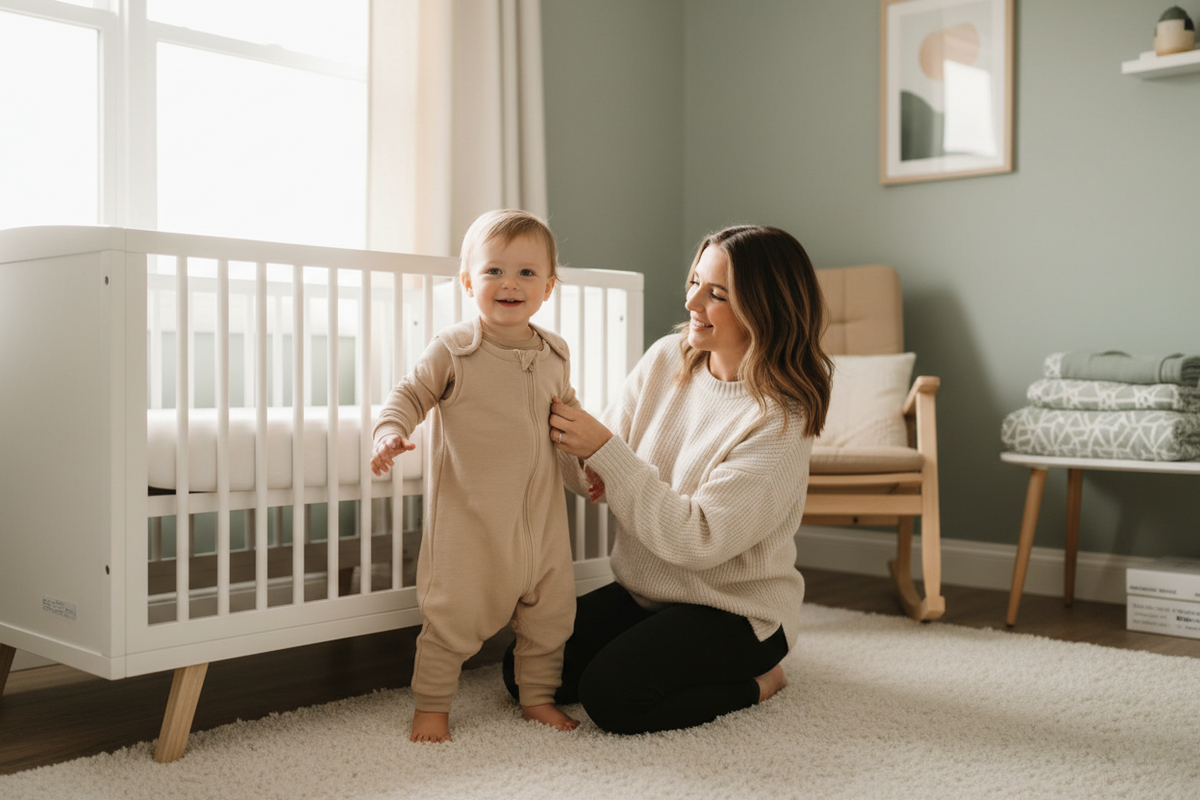


Laisser un commentaire
Ce site est protégé par hCaptcha, et la Politique de confidentialité et les Conditions de service de hCaptcha s’appliquent.